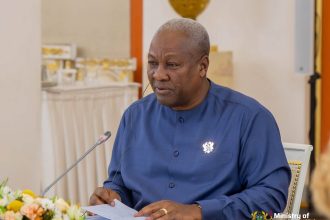
Arise Ghana, a national interventionist group, has assessed President John Mahama’s first year in his legacy term, highlighting significant economic recovery while urging deeper governance reforms and attention to social challenges.
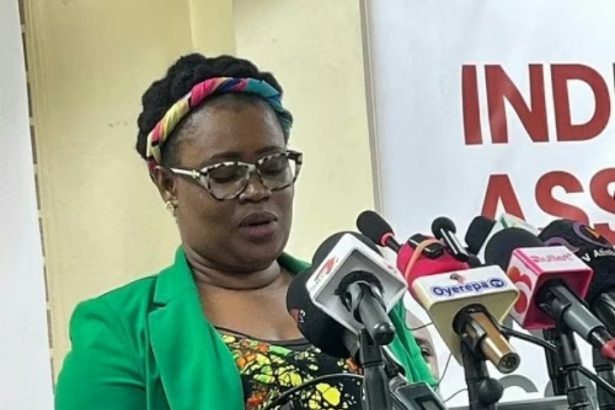
Presenting the assessment at the International Press Center, Co-Convener of Arise Ghana, Marion Gifty Nyaaba, described Ghana as moving from “cornered, trapped in a web of economic turmoil” to a nation where “the ship has steadied.”
The report detailed a dramatic turnaround in key macroeconomic indicators. Inflation has dropped from 23% to 6.3%, economic growth has rebounded to over 6%, and foreign reserves have grown to more than $11 billion.
The cedi, which once traded near 16 to the dollar, has stabilized between 10.4 and 10.6, marking its first annual appreciation in over three decades.
“These are not mere cosmetic tweaks,” Nyaaba stated. “They represent tangible, hard-fought gains in economic stability.”
More Read
The assessment also highlighted the revival of strategic state assets. The Tema Oil Refinery (TOR) has been reactivated after six years of inactivity, a move expected to reduce import bills and enhance energy security.
Reforms at the Cocoa Board have streamlined expenditures and increased producer prices, while the newly established Gold Board has formalized small-scale mining, reduced smuggling, and contributed around $4 billion to reserves from over 41 tons of exported gold.
Significant tax relief measures, including the removal of the COVID-19 health recovery levy and the e-levy, were noted for boosting disposable incomes and improving business operating capital.
Despite these gains, Arise Ghana cautioned that governance and social issues remain pressing. The group said anti-corruption initiatives, while gaining traction, must lead to “robust prosecutions” and “fair convictions” to restore public confidence.
Persistent challenges were highlighted as existential threats. Illegal mining (galamsey) continues to pollute rivers and destroy forests. Youth unemployment, affecting over 1.3 million young people, was described as a “ticking bomb.”
The group also rejected any notion of a constitutional third-term extension for the President, calling such calls “unwarranted and perilous.”
“Stability is merely the foundation, not the edifice of prosperity,” Nyaaba warned. “The journey towards inclusive wealth creation continues but can be eroded if corruption rears its ugly head again.”
The pressure group also announced plans for an indefinite picket to demand the extradition and prosecution of former Finance Minister Ken Ofori-Atta over past financial controversies.
Mrs. Nyaaba added that that ensuring accountability for past alleged malfeasance is a critical test for the government’s anti-corruption fight.
“Justice must remain impartial, unaffected by political affiliations, social status, or ties to power,” she said. “At all costs… the Attorney General must, through the state investigative agencies… ensure that all individuals like Ken Ofori-Atta implicated in past financial controversies should not escape justice.”
She asserted that such accountability is “essential to restoring public trust and deterring future misconduct.” The group’s position is a direct challenge to the Office of the Attorney General and the Office of the Special Prosecutor (OSP) to pursue high-profile cases from the previous administration.
“It is for this reason that I can assure all of you here present that Arise Ghana will soon be picketing endlessly to make sure that Ken Ofori-Atta is repatriated to Ghana here for him to face the law and answer the questions that the Ghanaian people are demanding,” Nyaaba said, to applause from supporters at the event.
The group’s call adds to growing public scrutiny on how the government handles legacy corruption cases. Nyaaba emphasized that the fight against corruption is measured “not by proclamation, but by tangible results,” and that investigations must lead to convictions.
Arise Ghana’s pledge to take to the streets signals its intent to transition from assessment to direct action, ensuring that its demand for Ofori-Atta’s extradition remains a prominent part of the national discourse as the Mahama administration enters its second year.