….Urges Ghanaian entrepreneurs to explore new industries, prioritise succession planning
President John Dramani Mahama has issued a strong warning to regulatory institutions against frustrating businesses through excessive bureaucracy, cumbersome licensing procedures and unnecessary administrative bottlenecks, insisting that regulators must facilitate investment rather than suffocate private-sector growth.
The President expressed concern that the difficulties entrepreneurs face in securing operational permits, licences, and other regulatory approvals continue to undermine efforts to make Ghana an attractive investment destination and to create a thriving business environment.
He stressed that regulatory institutions must reconsider their approach to dealing with businesses by adopting a more practical, responsive and investor-friendly attitude towards entrepreneurs seeking to establish or expand their operations.
“Regulators have a tendency to suffocate businesses. Regulators must see themselves in the eyes of the businessman,” President Mahama declared.
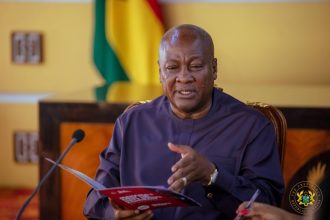
“Even as a regulator, you must look at the person who is applying for the permit and ask yourself, if I were that person, would I be happy with the service that I’m getting?” he questioned.
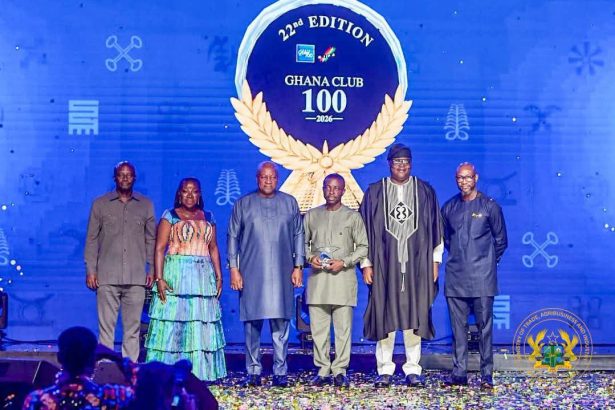
President Mahama made the remarks at the 22nd edition of the Ghana Club 100 Awards in Accra, organised by the Ghana Investment Promotion Authority (GIPA) to recognise and celebrate the country’s top-performing companies and their contributions to national economic development.
The event brought together leading business executives, investors, policymakers and other stakeholders in Ghana’s private sector.
The President observed that establishing and operating a business in Ghana often involved navigating several regulatory institutions to obtain business operating permits, licences, environmental impact assessments and other statutory approvals.
Although he acknowledged the importance of regulation in ensuring compliance with established standards, he maintained that the processes involved should not become obstacles to investment, entrepreneurship and business expansion.
He said regulatory agencies must recognise that their responsibilities extended beyond enforcing rules to creating an environment in which legitimate businesses could operate efficiently and contribute meaningfully to national development.
President Mahama, therefore, called on GIPA, the Ministry of Trade, Agribusiness and Industry, the ministry responsible for environmental regulation, and other relevant state institutions to collaborate to review and simplify licensing and regulatory procedures.
“Let’s come together and see how we can make regulation easier. So, licensing and regulation must be made as easy as possible,” he stressed.
His remarks underscored the government’s determination to address administrative inefficiencies that discourage investment, increase the cost of doing business and delay the establishment of new enterprises.
President Mahama also paid tribute to companies that had remained committed to Ghana’s economy over the years, despite periods of economic uncertainty, financial difficulties and changing business conditions.
He acknowledged the resilience of businesses that had continued to invest, sustain employment and contribute to economic activity even during challenging periods.
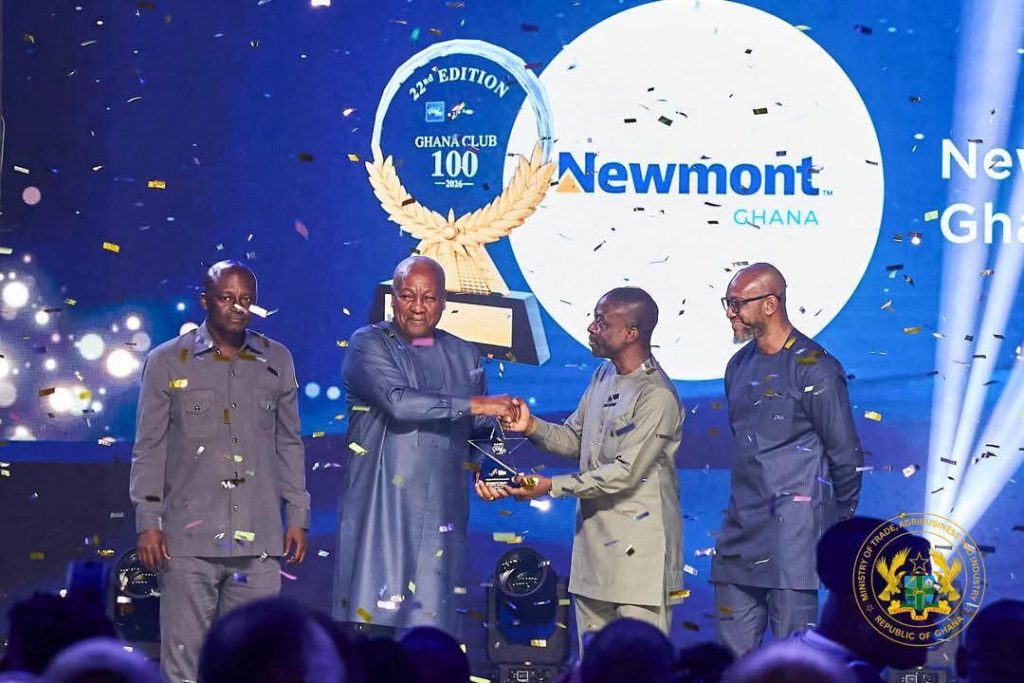
“Some of you have been in this from the very beginning, 22 years. You have stuck with Ghana,” he said.
The President described their continued presence in the country as a demonstration of confidence in Ghana’s long-term economic prospects and the potential of its private sector.
He assured business leaders that his administration remained committed to fiscal discipline, macroeconomic stability and policies designed to create a predictable environment for investment.
According to him, businesses require economic stability and certainty to make long-term investment decisions, expand their operations, create employment opportunities and contribute to sustainable national development.
He indicated that the government would continue to pursue measures to strengthen investor confidence and encourage private-sector participation in the country’s economic transformation.
Turning his attention to indigenous entrepreneurship, President Mahama challenged Ghanaian business owners to move beyond traditional and increasingly saturated sectors and explore emerging opportunities under the government’s US$10 billion New Economy Programme.
He argued that Ghana’s industrial transformation could not depend entirely on foreign direct investment, stressing that indigenous entrepreneurs must demonstrate greater ambition by venturing into productive sectors that generate employment and strengthen the country’s industrial base.
The President singled out the proliferation of sachet water factories as an example of the tendency among some local entrepreneurs to concentrate their investments in familiar business activities rather than explore new opportunities.
“And let me talk to an indigenous private sector. We have enough sachet water factories. We don’t need any more sachet water factories,” he stated.
His comments were intended to encourage Ghanaian investors to diversify their businesses and take advantage of opportunities in industries that could contribute more significantly to economic diversification, industrialisation and job creation.
President Mahama maintained that local entrepreneurs had the potential to establish and develop industries without having to wait for foreign investors to take the initiative.
“There’s a lot we can invest in. We don’t have to wait for foreign investors to come and set up those industries; you too can invest,” he said.
He urged the indigenous business community to take a more prominent role in the government’s economic transformation agenda by identifying investment opportunities and mobilising resources to establish competitive enterprises.
The President stressed that Ghanaian participation in the New Economy Programme would be critical to ensuring that the benefits of industrialisation translated into sustainable businesses, employment opportunities and broader economic prosperity.
President Mahama also expressed concern about the inability of some indigenous businesses to survive beyond their founders, identifying inadequate succession planning and family disputes as major threats to the sustainability of locally owned enterprises.
He observed that several businesses established through years of sacrifice, investment and hard work had collapsed following the deaths of their founders because appropriate structures had not been put in place to guarantee continuity.
According to him, disputes among surviving family members over ownership, management and control of businesses frequently undermined otherwise successful enterprises.
“Unfortunately, in Ghana, somebody sets up an industry. He works hard and establishes a factory; if the business is doing well, just let the founder die, and it will turn into a family dispute, and they will quarrel over the business until the business collapses,” he lamented.
The President described the situation as a serious challenge to the growth of enduring indigenous businesses and urged entrepreneurs to make succession planning an integral part of their business development strategies.
He stressed that business owners must identify and prepare capable successors and establish appropriate management and governance structures to ensure their enterprises continue operating beyond their lifetimes.
“You must do succession planning. Even as you are setting up the industry, the person who will take it over and continue it to the next thing, you must be putting them next in line,” he advised.
President Mahama emphasised that building strong and sustainable indigenous enterprises required more than establishing profitable businesses, arguing that entrepreneurs must also develop institutions capable of surviving changes in ownership and leadership.
He said the long-term survival of Ghanaian businesses was essential to strengthening the private sector, protecting jobs, preserving investments and ensuring that successive generations benefited from the enterprises established by their predecessors.
The President reiterated his administration’s commitment to creating a more conducive business environment through improved regulation, economic stability, and investment opportunities, while challenging indigenous entrepreneurs to demonstrate innovation, ambition, and long-term planning in their contributions to Ghana’s economic development.