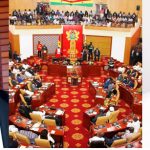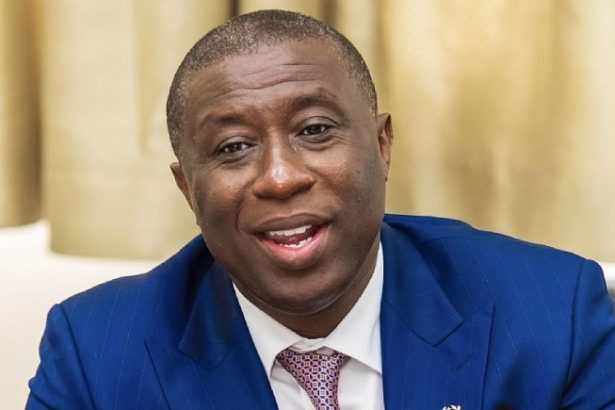
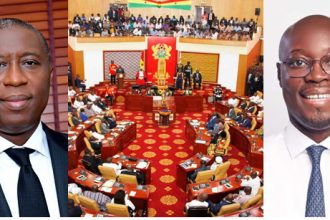
The Member of Parliament (MP) for Okaikwei Central, Patrick Yaw Boamah, recently earned public admiration for appealing to the Speaker of Parliament, Alban Sumana Kingsford Bagbin, to reconsider holding Parliament’s 2027 post-budget workshop at the Volta Serene Hotel in Ho, Volta Region. He argued that the workshop should instead be held in the Parliamentary Chamber in Accra to save public funds and avoid exposing MPs and parliamentary staff to the risks associated with travelling on roads undergoing construction.
His position was widely seen as a call for prudence and responsible management of public resources. However, the MP is once again in the news, and this time, his position appears to contradict the very principles he previously championed.
Mr Boamah is now taking issue with the Finance Minister, Dr Cassiel Ato Forson, over the decision to cancel monthly allowances paid to board members of state institutions.
This newspaper finds the MP’s latest position difficult to understand. A politician who previously spoke strongly against unnecessary public expenditure should be among the first to support measures aimed at reducing the financial burden on the state. Why, then, is he raising concerns about a decision intended to cut what appears to be an unnecessary cost to the public purse?
It also raises questions about whether his earlier objection to the post-budget workshop was driven purely by concerns about public expenditure or whether the choice of the Volta Region as the venue had something to do with it.
As far as this newspaper is concerned, the decision to discontinue monthly allowances for board members deserves serious consideration. Board members are generally not responsible for the day-to-day administration of the institutions they serve. Their role is primarily to provide strategic direction, oversight and governance. They are not full-time employees of these institutions.
In most cases, board members receive sitting allowances for attending board meetings, which are often held quarterly or as and when necessary. Why, therefore, should they receive monthly allowances regardless of how frequently they meet or the level of work they undertake?
The MP must explain why he believes board members should continue to receive monthly allowances when the government is seeking to rationalise public expenditure. Is there a compelling justification for such payments, particularly at a time when the country must be more deliberate about how public funds are spent?
Unfortunately, his stance risks reinforcing the perception that some politicians are more concerned about protecting benefits and privileges within the political establishment than advancing the broader public interest. It is worth remembering that politicians themselves are appointed to serve on boards of state institutions. This makes it even more important for them to avoid positions that could be interpreted as defending personal or institutional interests at the expense of the taxpayer.
There are several pressing issues in the 2027 Budget that should demand the MP’s attention. His constituents in Okaikwei Central need better roads and improved public amenities. Young people in the constituency are looking for employment opportunities, while residents continue to expect better services and infrastructure. These are issues that directly affect people’s everyday lives and deserve sustained advocacy from their elected representative.
Yet, rather than focusing his attention on these pressing concerns and the many areas of public expenditure that require scrutiny, the MP has chosen to make an issue out of the cancellation of monthly allowances for board members.
This newspaper is disappointed in Mr Boamah. We expect him to demonstrate consistency, particularly on matters concerning the prudent use of public resources. One cannot champion expenditure cuts when they appear convenient and oppose them when they affect the interests of people within the political establishment.
Public office is a responsibility, not an opportunity to protect privileges. The MP must remember that his primary obligation is to the people he represents and the Ghanaian taxpayer.
If he has nothing constructive to contribute to the 2027 Budget debate beyond defending monthly allowances for board members, then he would do the public a favour by remaining silent. Ghana needs legislators who will challenge waste, demand accountability and put the interests of ordinary citizens ahead of political convenience.