….Says Frank Osei’s Ghanaian-Swedish consortium was only directed to Interior ministry
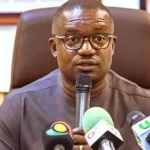
Former Minister for Transport, Kwaku Ofori Asiamah, has distanced himself from the controversial TraffiTech-GH automated traffic enforcement programme, insisting that neither he nor the Ministry of Transport was responsible for negotiating, approving or signing the agreement under the administration of former President Nana Addo Dankwa Akufo-Addo.
The former minister has consequently sought to set the record straight following investigations by The Herald, which had linked him and the Ministry of Transport to the circumstances surrounding the introduction of the programme and the involvement of the Ghanaian businessman Frank Kwame Osei, Chairman of Nationwide Group Ghana.
Investigations by The Herald into the controversial TraffiTech-GH identified Mr Osei as having business interests spanning petroleum product marking with the National Petroleum Authority (NPA), tax stamps and revenue assurance with the Ghana Revenue Authority (GRA), and traffic enforcement technology with the Ghana Police Service, the National Road Safety Authority (NRSA) and DVLA.
Mr Ofori Asiamah, in an interaction with The Herald, on Monday maintained that the Ministry of Transport had no contractual responsibility for the project, explaining that the company behind the initiative was referred to the Ministry of the Interior after initially approaching his ministry.
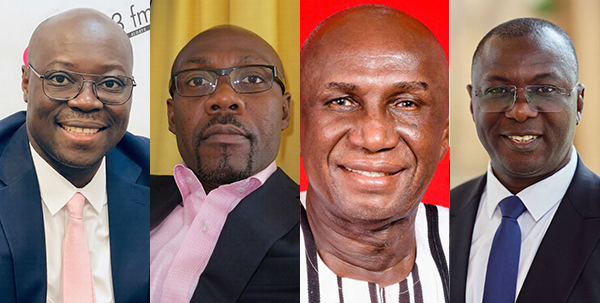
He identified the Ministry of the Interior, then headed by Ambrose Dery, as the institution responsible for handling the agreement with Nationwide Traffic Management and Enforcement Limited (NTMEL), stressing that traffic enforcement falls within the mandate of the Ghana Police Service rather than the Ministry of Transport.
He explained that, under him, he attempted the passage of a Constitutional Instrument (LI) by Parliament but was unsuccessful until the Mahama government came to office last year, and had it passed, including the banning of siren use by privately-owned vehicles.
According to him, although the Ministry of Transport exercises oversight responsibility over the Driver and Vehicle Licensing Authority (DVLA) and the National Road Safety Authority (NRSA), the enforcement of road traffic regulations remains the responsibility of the police, which operates under the Ministry of the Interior.
His explanation represents a significant development in The Herald’s continuing investigations into the controversial programme, particularly the roles played by government officials and private businessmen in its conception, negotiation and eventual implementation.
The former minister’s intervention also challenges suggestions that he facilitated the entry of Mr Osei and his associated companies into the government arrangement.
Mr Ofori Asiamah insisted that he did not personally know Mr Osei and rejected claims that he had introduced the businessman to the government for the purposes of securing the TraffiTech-GH contract.
He wouldn’t agree that the company’s initial approach to the Ministry of Transport might have created the erroneous impression that his ministry was responsible for the transaction.
However, he maintained that the company was directed to the appropriate institution because the proposed enforcement arrangement fell outside his ministry’s operational mandate.
“We don’t control traffic,” he told The Herald, repeatedly emphasizing that responsibility for enforcing road traffic regulations rests with the police.
“Not that I’m running away from government. We are defending government. But let’s set the record straight,” he stated.
He insisted that the distinction between the Ministry of Transport’s road safety policy responsibilities and the police’s traffic enforcement mandate was fundamental to understanding which institution had responsibility for the agreement.
Mr Ofori Asiamah further challenged suggestions that the Ministry of Transport had granted executive approval for the transaction.
“Executive approval was not done by us,” he maintained, urging The Herald to undertake documentary checks with the Interior Ministry currently led by Mohammed-Mubarak Muntaka, to establish the institution responsible for the agreement.
He explained that the involvement of the DVLA and road safety institutions in the programme, particularly the proposed use of vehicle registration data, should not be confused with responsibility for negotiating or signing the TraffiTech-GH contract.
According to him, the use of DVLA information in the automated enforcement system does not automatically make the Ministry of Transport the contracting authority.
The former minister said the distinction was important because the public controversy had created an impression that every institution associated with road transport was necessarily involved in approving the programme.
He consequently urged that the facts surrounding the transaction be properly established rather than attributing responsibility to officials merely because their ministries had some connection with road transport administration.
Mr Ofori Asiamah nevertheless acknowledged the potential benefits of automated traffic enforcement, describing the initiative as a useful intervention to address reckless driving, improve compliance with road traffic regulations and reduce the carnage on Ghana’s roads.
He, however, expressed concerns about the challenges associated with its implementation, suggesting that the difficulties surrounding the programme should not necessarily overshadow its intended road safety benefits.
His comments come amid growing public criticism of TraffiTech-GH, particularly its contractual arrangements, revenue-sharing structure and the role of private companies in enforcing traffic regulations and benefiting from fines imposed on motorists.
At the centre of the controversy is the reported 11-year agreement entered into in 2022 under the Akufo-Addo administration, involving Nationwide Traffic Management and Enforcement Limited (NTMEL), the private entity behind the implementation of the programme.
The company is linked to Mr Osei, whose Nationwide Group has business interests spanning petroleum product authentication, tax stamps, environmental auditing and electronic enforcement technology.
Investigations by The Herald have established that the private implementing arrangement involves a joint venture in which interests associated with Mr Osei hold a 60 per cent stake, while Swedish traffic enforcement technology company Sensys Gatso holds the remaining 40 per cent.
Of particular concern is the reported contractual provision under which the private implementing company is entitled to 40 per cent of fines collected through the automated traffic enforcement system.
The arrangement has raised questions about the financial benefits accruing to the private operator, the government’s share of the revenue and whether sufficient safeguards exist to protect the public interest.
Critics have also questioned the propriety of allowing a private commercial entity to derive substantial revenue from penalties imposed on motorists for traffic offences.
The controversy has further generated debate over the transparency of the procurement process, the duration of the agreement and the responsibilities of the state institutions involved.
According to the Ministry of Finance’s 2024 Public-Private Partnership Report, published during Mohammed Amin Adam’s tenure as Finance Minister, the project involves an estimated investment of GH¢77.73 million.
The agreement provides for the deployment and operation of speed-detection cameras, red-light monitoring equipment, software and associated systems for processing traffic violations.
People familiar with the arrangement said the biggest part of the whole gig is that, in addition to taking 40% of the fines, middleman Frank Osei and his Swedish buddies want Ghana to bear all serious costs of investments, from cameras to backroom computers.
This has seen state-financed security communications and monitoring systems, including the Integrated National Security Communications Enhancement Network, commonly associated with the “Alpha Project”.
The initiative, implemented in partnership with Huawei Technologies, involved installing surveillance cameras and other security communications infrastructure. It commenced under the Mahama administration and continued during the Akufo-Addo government as part of broader efforts to strengthen national security monitoring and crime prevention.
Some accounts have placed the cost of the wider security communications infrastructure at more than US$380 million. This arrangement has been described as total rip-off compared Rwanda, Kenya, Nigeria and many other countries the technology has been deployed.
The Herald’s investigations had earlier brought into focus the political and business relationships surrounding the transaction, including claims about Mr Osei’s connections with influential personalities in both the New Patriotic Party (NPP) and the National Democratic Congress (NDC).
Of particular interest is his reported relationship with the Minister for Finance, Dr Cassiel Ato Forson, which sources claim dates back to the first Mahama administration, when Dr Forson served as Deputy Minister for Finance under Seth Terkper.
However, Mr Ofori Asiamah’s explanation disputes claims linking him personally to the introduction of Mr Osei into the transaction.
His account places responsibility for the contractual arrangements with the Ministry of the Interior under Mr Dery, although the precise roles played by the various state institutions will require examination of the relevant contractual and approval documents.
The former minister’s clarification also raises fresh questions about the extent of the involvement of the Ministry of the Interior, the Ghana Police Service and other agencies in the negotiations that preceded the signing of the agreement.
The TraffiTech-GH programme, which relies on automated surveillance cameras and related technology to detect traffic violations, is intended to improve compliance with road traffic regulations and strengthen enforcement against dangerous driving.
Among the offences targeted are speeding, running red lights and other violations that contribute to road traffic accidents.
The initiative has received the backing of President John Dramani Mahama, who recently endorsed the deployment of automated traffic enforcement technology as part of efforts to improve discipline on the country’s roads.
The President’s endorsement has, however, attracted criticism because the agreement was negotiated under the previous administration and has continued to generate concerns about its commercial terms.
Some motorists and transport operators have questioned the government’s decision to proceed with the programme at a time when several roads remain in poor condition, with inadequate road markings, malfunctioning traffic lights and insufficient street lighting.
Others have argued that road safety enforcement should be accompanied by corresponding improvements in road infrastructure and traffic management to ensure that motorists are not unfairly penalized for conditions beyond their control.
The controversy has also revived concerns about the use of private companies in public enforcement arrangements, particularly where the remuneration of the private operator is tied directly to the volume or value of penalties collected.
For Mr Ofori Asiamah, however, the immediate issue is the need to distinguish between the institutions responsible for the transaction and those whose statutory functions merely intersect with the programme.
He maintains that the Ministry of Transport neither signed the agreement nor granted the executive approval underpinning it.
His account now places renewed attention on the Ministry of the Interior under the previous administration and the documentary trail surrounding the approval and execution of the TraffiTech-GH contract.
The Herald will continue examining the circumstances under which the agreement was concluded, the roles of the officials involved and the financial implications of the arrangement for the state and motorists.