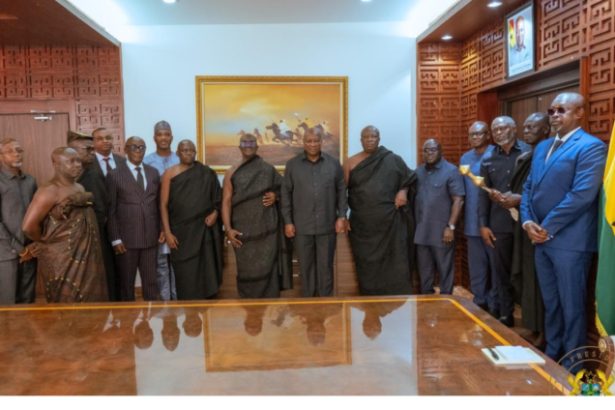
Preparations are underway in Kumasi for the final funeral rites of the late Asantehemaa, Nana Konadu Yiadom III, as the Asantehene, Otumfuo Osei Tutu II, on Monday dispatched a delegation to formally invite President John Dramani Mahama to the historic occasion.
The delegation, led by Amoamanhene Nana Agyenim Boateng I, called on the President at the Jubilee House in Accra to deliver the official invitation on behalf of the Asantehene.
According to a statement issued by the Presidency, the royal funeral has been scheduled for 15 to 18 September 2025 at the Manhyia Palace in Kumasi. The event is expected to draw thousands, including traditional rulers, state leaders, the diplomatic corps, and Ghanaians from all walks of life, to pay their last respects to the revered queen mother of Asanteman.
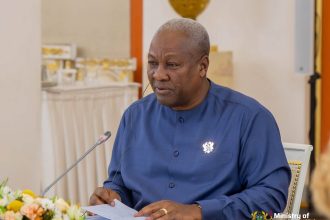
President Mahama, in receiving the delegation, extended his heartfelt condolences to the Asantehene and the people of Asanteman on the passing of the Asantehemaa. He described her death as an immense loss not only to the Ashanti Kingdom but to Ghana as a whole. The President also gave firm assurance of his intention to attend the funeral and personally honour the memory of the late queen mother.
Nana Konadu Yiadom III passed away on 7 August 2025, aged 98, bringing to a close nearly half a century of service as Asantehemaa. Born in 1927, she was the eldest sister of Otumfuo Osei Tutu II and played a central role in the royal court, advising on traditional matters and guiding the Asante Kingdom’s cultural and spiritual life.
More Read
Installed in 1977, Nana Konadu Yiadom III became the longest-serving queen mother in Asante history. Her reign was marked by her commitment to preserving Ashanti customs, supporting women and children in the kingdom, and working closely with successive Asantehenes to uphold the unity and dignity of Asanteman.
Her influence extended beyond Kumasi, as she was widely regarded as one of the most respected traditional female leaders in Ghana.
The forthcoming funeral rites at Manhyia Palace are expected to reflect the grandeur and rich traditions of Asanteman. It will feature elaborate cultural displays, solemn traditional ceremonies, and the gathering of chiefs and royals from across Ghana and beyond.
The death of the Asantehemaa has left a significant void, but her legacy as a custodian of tradition, a mother figure to the Ashanti Kingdom, and a symbol of continuity and resilience will continue to resonate.