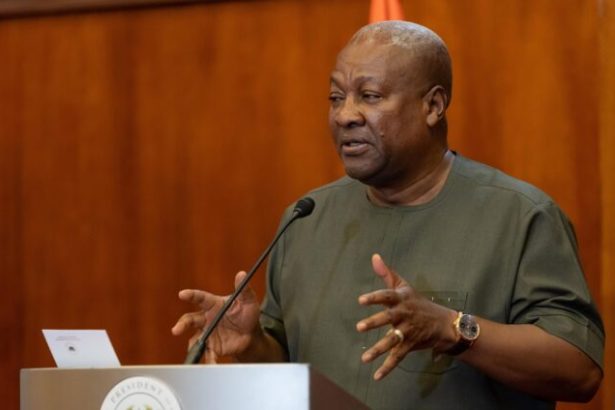
President John Dramani Mahama has reaffirmed his administration’s commitment to strengthening Ghana’s anti-corruption framework, insisting that ongoing legal disputes surrounding the Office of the Special Prosecutor (OSP) must not derail efforts to ensure accountability in public life.
Speaking at the 2026 May Day celebrations held at Jackson Park in Koforidua on Friday (1 May), Mahama said government remains convinced that there is a solid constitutional basis for an effective Special Prosecutor institution, despite pending legal challenges before the Supreme Court.
“Recently, there have been legal disputes about the constitutionality of the Office of the Special Prosecutor.
“While some of the issues are pending appeal and Supreme Court interpretation, the government believes that there is space for an effective Office of the Special Prosecutor with special powers of prosecution,” he stated.
Mahama revealed that the government, through the Attorney-General, has already laid before Parliament a bill seeking to establish regional tribunals aimed at improving the efficiency of the justice system and accelerating prosecutions.
More Read
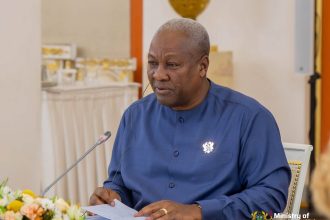
According to him, the proposed tribunals will decentralise justice delivery and fast-track the handling of cases—particularly complex corruption-related matters that often suffer delays under the current court structure.
“This will help to speed up the system of justice,” he added.
The President’s comments come at a time of heightened debate over the mandate of the OSP, which was established under the Office of the Special Prosecutor Act, 2017 (Act 959) to investigate and prosecute corruption-related offences.
Although the OSP has undertaken several high-profile investigations since its establishment, lingering questions remain over whether its prosecutorial authority is constitutionally independent or ultimately subject to the powers of the Attorney-General.
Legal analysts argue that the crux of the matter lies in reconciling Act 959 with Article 88 of the Constitution—particularly whether Parliament can vest prosecutorial authority in an independent body outside the direct control of the Attorney-General.
Mahama maintained that his administration’s priority is to build stronger, more efficient institutions capable of delivering justice and restoring public confidence in Ghana’s fight against corruption.