


By Patrick Biddah
The Netherlands has reaffirmed its commitment to strengthening economic cooperation with Ghana, with particular emphasis on stimulating investment, expanding trade and supporting local production to reduce the country’s dependence on imports.
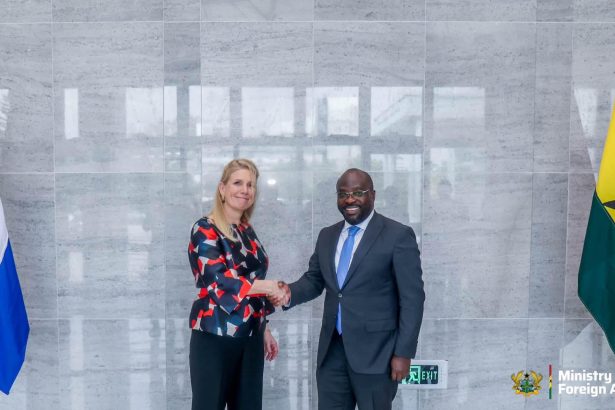
Guusje Korthals Altes, Deputy Director of Political Affairs at the Ministry of Foreign Affairs of the Netherlands, said the two countries would work together to identify investment opportunities and deepen cooperation in strategic sectors to help Ghana achieve greater economic self-sufficiency.
She said the Netherlands was keen on leveraging its technical expertise and investment capacity to support Ghana’s economic development, particularly in agriculture, horticulture, cocoa production, seeds, poultry and water management.
Ms Korthals Altes was speaking at the fifth session of the Political Consultations between Ghana and the Netherlands, where officials from both countries discussed bilateral relations, economic cooperation, security and other areas of mutual interest.
More Read
She noted that the Netherlands considered Ghana a key partner in Africa, describing the country as a stable democracy and an important regional player in diplomacy and security within West Africa, the African Union and the United Nations.
According to her, the strong relationship between the two countries, underpinned by shared democratic values and longstanding people-to-people connections, provided a solid foundation for expanding economic collaboration.
She observed that trade relations between Ghana and the Netherlands remained strong, adding that there were opportunities to further expand commercial exchanges through increased investment and partnerships between businesses in both countries.
She explained that the Netherlands was particularly interested in supporting Ghana’s agricultural sector, where Dutch expertise could complement Ghana’s natural resources and production capacity.
The collaboration, she said, would help stimulate investment, strengthen local industries, improve productivity and support Ghana’s ambition to become more self-sufficient and less reliant on certain imported products.
Other areas identified for enhanced cooperation included poultry production and water management, which she said offered considerable opportunities for partnerships capable of delivering mutual economic benefits.
Touching on cultural relations, Ms Korthals Altes said Ghana and the Netherlands were also making progress in their cooperation on the restitution of cultural artefacts.
She acknowledged that the shared history of the two countries included difficult chapters that needed to be confronted through dialogue, understanding and practical collaboration.
She said the ongoing restitution efforts reflected the commitment of both countries to addressing aspects of their shared history while creating new opportunities for cultural cooperation.
She expressed pride in the partnership and said the process of returning cultural objects was an important aspect of strengthening mutual trust and understanding between the two nations.
Shared values and diplomatic relations
Ms Korthals Altes also highlighted cooperation between Ghana and the Netherlands in addressing transnational organised crime and violent extremism, stressing the importance of working together to promote regional and international security.
She also welcomed the planned visit of President John Dramani Mahama to the Netherlands in December, describing it as an opportunity to further strengthen bilateral relations.
For his part, Ambassador Harold Agyemang, Director in charge of Political Affairs at Ghana’s Ministry of Foreign Affairs, highlighted the significance of the recent visit to Ghana by Her Majesty Queen Máxima of the Netherlands earlier in November.
He said the visit had reinforced the shared values and commitment that continued to underpin relations between Ghana and the Netherlands.
Queen Máxima’s visit, undertaken in her capacity as the United Nations Secretary-General’s Special Advocate for Financial Health, also provided an opportunity to strengthen cooperation on financial inclusion and financial health.
Ambassador Agyemang noted that such high-level engagements were important in sustaining diplomatic relations and creating opportunities for collaboration on issues of common interest.
The fifth political consultations provided a platform for both countries to review progress in their bilateral relations, identify emerging opportunities and agree on areas requiring greater cooperation.




