…Rescues Ghana’s oil & gas sector
The Minister of Energy and Green Transition, John Abdulai Jinapor, acting on the orders of President John Dramani Mahama, has withdrawn the controversial Unitisation Directives imposed by the Akufo-Addo government on April 9, 2020, October 14, 2020 and November 6, 2020.
The decision, announced yesterday, February 25, 2025, and forwarded in letters sent to ENI and Springfield, marks a significant shift in Ghana’s petroleum sector.
The previous administration, under President Akufo-Addo, had enforced compulsory unitisation between Springfield Exploration and Production Limited (Springfield) and Eni Ghana Exploration and Production Limited (ENI) concerning the Afina-1X Discovery and the Sankofa Cenomanian Oil Field.
These directives mandated the joint development of the two oil fields amid concerns.
More Read
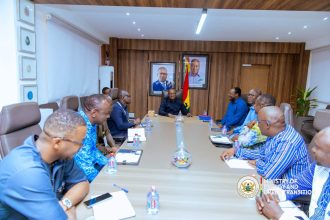
Yesterday’s withdrawal, follows a comprehensive review of the Arbitral Award referenced SCC Arbitration U2021/114 (ENI & Vitol v. Ghana & GNPC) dated 8th July 2024, alongside legal counsel provided by the Attorney General and Minister of Justice, Dr Dominic Ayine. It also comes after consultations with key industry stakeholders.
The Ministry of Energy, acknowledged the Tribunal’s findings, which determined that, while the directives’ issuance violated the Petroleum Agreement due to the specific circumstances of their implementation, the broader concept of unitisation itself, remains legally valid.
This ruling grants Ghana the flexibility to determine the most suitable approach to resource management in its national interest.
According to Ministry sources, the withdrawal of the directives, does not preclude the Minister from issuing new ones in the future, should the need arise for the equitable and efficient development of Ghana’s petroleum resources.
This move signals a pivotal moment for Ghana’s oil and gas industry. President Mahama’s decision to rescind the controversial unitisation directive, not only fulfils a key campaign promise, but also aims to restore investor confidence and revitalise the sector.
The decision, follows concerns raised by the Minister of Energy, regarding the sector’s decline and aligns with findings from the Petroleum Commission, which concluded that the available data did not justify unitisation.
The concept of unitization, is a standard practice in the oil and gas industry, applied when hydrocarbon reservoirs straddle multiple contract areas.
The idea is to optimize recovery, avoid wasteful competition, and ensure a fair distribution of benefits among stakeholders. However, its implementation requires rigorous technical evaluation and agreement among affected parties.
Ghana’s unitization debate began in 2019, when the Akufo-Addo government, under the administration of the New Patriotic Party (NPP), issued a directive through John Peter Amewu, the then-Energy Minister, ordering the unitization of the Sankofa and Afina oil fields.
The directive was primarily driven by the claims of Springfield Exploration and Production Ltd., a Ghanaian-owned company, which argued that its Afina discovery was part of the same reservoir as ENI and Vitol’s Sankofa field. Springfield insisted that both fields should be jointly developed to optimize production and maximize national revenue.
However, the directive was met with resistance from industry experts, regulatory bodies, and the affected companies.
ENI and Vitol, challenged the order, arguing that the data did not support the claim of reservoir connectivity. Despite their objections, the Akufo-Addo government proceeded with the directive, setting the stage for a lengthy dispute that eventually led to international arbitration.
ENI and Vitol, took their grievances to the International Tribunal, which ruled against Ghana, essentially stating that the unitization directive lacked a strong technical basis. The ruling was a significant blow to Ghana’s oil and gas credibility, highlighting governance weaknesses in resource management.
Industry analysts criticized the government for failing to build a solid technical and legal case before issuing the directive, while some questioned the motivations behind the decision, given Springfield’s political connections.
The arbitration, defeat exposed deep structural issues within Ghana’s petroleum sector. How could a government with access to thousands of petroleum experts—from the Ghana National Petroleum Corporation (GNPC) to the Petroleum Commission—fail to defend its policies effectively? Why did the state align itself with the claims of a private company despite the lack of empirical evidence? These questions raised concerns about regulatory independence, decision-making integrity, and the broader implications for Ghana’s investment climate.
In the lead-up to the 2024 elections, the then-opposition National Democratic Congress (NDC) criticized the unitization directive, promising to reverse it if elected.
The NDC, argued that the policy, had harmed investor confidence, discouraged exploration activities, and slowed down growth in the oil sector.
After winning the election, however, the new administration found itself in a difficult position. While the legal and technical evidence for reversing the directive was clear, the political and financial pressures remained.
Springfield, which had secured its Afina block under a previous NDC administration, continued to lobby for the directive’s enforcement, leveraging its longstanding political ties. Some within the government hesitated, fearing potential political backlash or legal complications.
Despite these pressures, the Minister of Energy, John Abdulai Jinapor, conducted a thorough review of the matter, consulting with the Petroleum Commission and legal experts. The findings were conclusive: the available data did not justify unitization, and continuing to enforce the directive would only further damage Ghana’s oil sector.
With this in mind, the minister, advised President Mahama to withdraw the directive, warning that failure to act could lead to further industry decline.
By withdrawing the directive, the president has not only honoured a key campaign promise, but also demonstrated strong leadership in prioritising national interest over vested interests.
This decision, sends a clear message to investors: Ghana is committed to transparent, evidence-based policy decisions in its oil and gas sector.
The withdrawal also marks an important step toward restoring the credibility of state institutions. The Petroleum Commission’s findings and the Attorney General’s legal opinion were unambiguous, and the president’s willingness to act on this evidence reinforces a recovery of integrity of Ghana’s regulatory framework. This is a significant departure from past instances where political considerations overshadowed technical expertise.
One of the most damaging effects of the unitization dispute was the chilling effect it had on investor confidence. Several oil companies became wary of Ghana’s regulatory environment, with some halting investment plans or exiting the country altogether. The perception that business decisions could be swayed by political connections rather than sound technical and legal principles deterred new entrants into the market.
With the withdrawal of the directive, Ghana now has an opportunity to rebuild trust with international investors. Companies that previously hesitated to commit resources to Ghana’s upstream sector may now reconsider, given the government’s demonstrated commitment to fairness and transparency.
A revitalized oil and gas industry would translate into increased exploration and production activities, job creation, and greater contributions to national revenue. This, in turn, would support economic development initiatives and provide the government with more resources to invest in infrastructure, education, and healthcare.
The unitisation saga offers several key takeaways for Ghana’s governance and resource management. Decisions affecting critical sectors such as oil and gas must be rooted in empirical data and technical analysis rather than political expediency or corporate lobbying. The reversal of the directive is a step in the right direction, but future policies must be subject to rigorous scrutiny before implementation.
The Petroleum Commission and other regulatory bodies must be insulated from political pressures to ensure that their decisions are guided solely by industry best practices and the national interest. Strengthening the independence of these institutions will be crucial for preventing similar policy missteps in the future. Ghana must continue to position itself as a stable and predictable investment destination. Clear and consistent regulatory policies, free from undue interference, will help attract new investors and drive long-term growth in the sector.
Individuals who played key roles in advancing the discredited unitisation directive should be held accountable, and mechanisms should be put in place to prevent similar governance failures. This includes improved oversight, stricter conflict-of-interest regulations, and greater transparency in decision-making processes.
The withdrawal of the unitisation directive is more than just a policy correction—it is a defining moment for Ghana’s oil and gas sector. It reaffirms the government’s commitment to sound governance, strengthens the country’s reputation as an investment destination, and sets the stage for renewed industry growth.
This move should provide much-needed reassurance to industry players that Ghana is serious about protecting investments and ensuring a fair playing field. For citizens, it is a reminder that leadership grounded in integrity and accountability can create tangible benefits for the economy and national development.
As Ghana moves forward, the focus must now shift toward broader reforms that will solidify these gains and ensure that the country’s resource wealth translates into lasting prosperity. The lesson is clear: when governance is guided by principles rather than political or financial influence, the entire nation stands to benefit.