President John Dramani Mahama has directed contractors working on the stalled 70 million Euro, new Eastern Regional Hospital project to return to the site and resume construction works.
The Eastern Regional Minister, Rita Akosua Adjei Awatey, disclosed this on Thursday, June 11, during her keynote address at the official launch of the Eastern Regional Hospital’s Centenary Celebration in Koforidua.
Former President Nana Addo Dankwa Akufo-Addo, on Wednesday, 22 July 2020, cut the sod to commence construction of Phase One of the 600-bed Eastern Regional Hospital project, which was expected to be completed within 36 months. However, the project has since suffered delays.
The entire project, costing €70 million, was to be financed by Standard Chartered Bank UK, with a credit guarantee from UK Export Finance (UKEF) of €7,920,000.
At the time, President Akufo-Addo stated that Phase One would involve constructing a 285-bed facility, out of the total 600-bed capacity. He noted that, upon completion, the hospital would be equipped with the requisite teaching and learning facilities and would place the Eastern Region firmly on the national healthcare map.
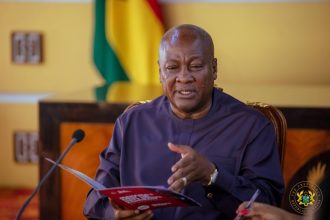
President Mahama’s directive to resume work, according to the Regional Minister, Rita Akosua Adjei Awatey, reflects the government’s commitment to strengthening healthcare infrastructure and improving access to quality healthcare services for residents of the Eastern Region.
“His Excellency has given directives for the contractor to return to the site and resume work on our hospital. The centenary celebration, therefore, provides an opportunity not only to celebrate past achievements but also to reaffirm our resolve to build a stronger and more robust healthcare system for our nation,” she said.
The Medical Superintendent of the Eastern Regional Hospital, Dr Aiden Suntaa Saanwie, reacting to the development, said management is also focusing on improving human resource capacity to match future demand, particularly if the facility is upgraded into a teaching hospital upon completion.
“That is going to be my priority going forward to ensure that people who are interested in various specialities are supported to go and specialise in these areas so that by the time the facility is ready, we will have the manpower to run it,” he said.
President Akufo-Addo’s projection at the time was that, upon completion, the hospital would enhance acute care and referral services and support the expanding network of primary healthcare facilities. It would also contribute to the development of mutual health insurance organisations within the region and its districts.
“Ghana continues to be grateful to UKEF for their continued support in our infrastructure development programme across all sectors of the economy. I am happy to state that the entire funding amount of seventy million euros (€70 million) has already been secured for Tyllium UK Ltd, the contractors for this project. They must therefore ensure that this project is completed within the 36-month period and within budget,” he added.
With the hospital expected to cover a total floor area of approximately 20,000 square metres, it will include administrative, training, conference and teaching facilities; an outpatient department; accident and emergency services; adjunct clinical services (pharmacy and imaging, including MRI); pathological services; surgical services, including seven theatres and endoscopy; obstetrics and gynaecology; inpatient wards; a burns unit; ICT infrastructure and a Health Information Management System (HIMS); medical waste management systems; and accommodation units for hospital staff.
President Akufo-Addo also noted that the outbreak of COVID-19 had exposed the unequal distribution of healthcare facilities in Ghana, as infrastructure has historically been concentrated in Accra and a few other major cities. He stressed that epidemics and pandemics can spread to any part of the country.
“There are 101 districts in our country without district hospitals; we have six new regions without regional hospitals; and we do not have infectious disease control centres dotted across the country. Government is doing something about it, and that is why, shortly, the construction of the 101 hospitals in districts without hospitals will commence,” he said.
He added: “It will mean that the eight districts in this region currently without hospitals, namely Akyemansa, Asene/Manso/Akroso, Asuogyaman, Atiwa, Ayensuano, Birim South, Kwahu Afram Plains South, and Upper West Akyem, will see the construction of district hospitals. Each of these hospitals will be a quality, standard-design 100-bed facility, with accommodation for doctors, nurses and other health workers.”
He further indicated that the government was committed to constructing six new regional hospitals in the six new regions, rehabilitating Effia-Nkwanta Hospital in Sekondi, and developing a new regional hospital for the Western Region.
“Indeed, government is committed to modernising all other major hospitals across the country so they can deliver quality healthcare for our people and help Ghana become an attractive destination for medical tourism in the region,” he stressed.
Thanking the Omanhene of the New Juaben Traditional Area, Daasebre Oti Boateng, for donating the land for the project, he assured the gathering that the hospital would be a symbol of greater development for Koforidua, the Eastern Region and the country as a whole.
“Government’s commitment to the total development of Ghana is absolute,” he added.