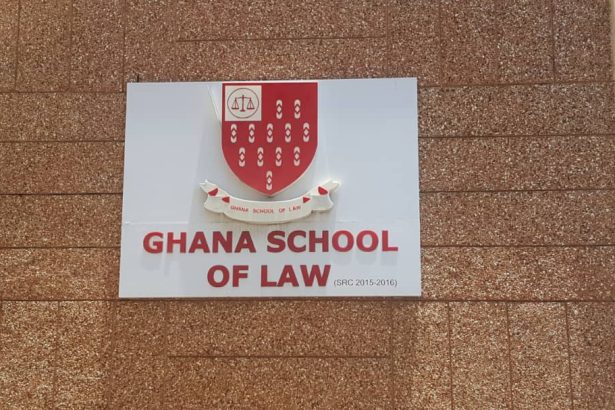
President John Dramani Mahama has signed into law the Legal Education Reform Bill (2025), bringing to an end a 66-year monopoly held by the Ghana School of Law over professional legal training in the country.
The reform is expected to significantly reshape the structure of legal education by allowing accredited universities to offer professional law programmes, a move widely championed by legal scholars, students and policy advocates who have long argued that the current system restricts access to the profession.
Speaking after assenting to the Bill on Monday, President Mahama said the legislation is intended to strike a balance between maintaining academic and professional standards while broadening access to legal education.
“The objective is to regulate legal education and ensure the highest standards in terms of legal education, but also to open up a space for more opportunities for legal education in Ghana,” he said.
He added that the law responds to long-standing concerns raised by aspiring lawyers who have struggled to gain admission into the country’s sole professional law training institution.
More Read

“This particular Act has been one that many aspiring lawyers have been looking up to,” the President noted.
Since its establishment in 1958, the Ghana School of Law has exclusively administered the professional law course required for admission to the Ghana Bar, a system that has frequently come under criticism for creating a bottleneck in legal training.
Over the years, hundreds of qualified law graduates have reportedly been denied entry due to limited intake capacity, fuelling calls for reform within the sector.
Under the new law, universities that meet accreditation standards set by the relevant regulatory authorities will now be authorised to run professional legal training programmes alongside the Ghana School of Law.
The reform is expected to expand capacity, reduce pressure on the existing system and create more pathways into the legal profession, marking one of the most significant overhauls of legal education in decades.