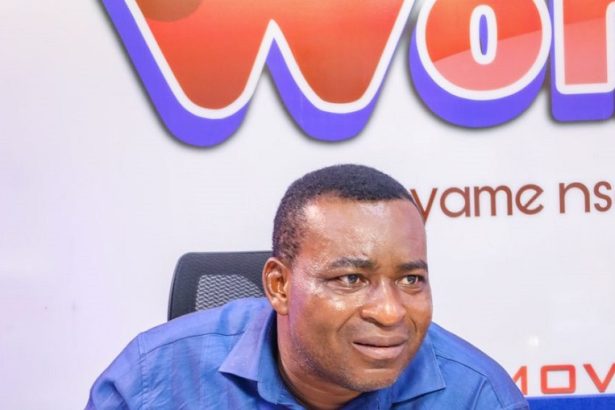
The Criminal Division of the High Court in Accra has ordered the Ashanti Regional Chairman of the New Patriotic Party (NPP), Bernard Antwi Boasiako, popularly known as Chairman Wontumi, to open his defence in an ongoing criminal trial linked to mining operations at Samreboi.
Justice Audrey Kocuvie-Tay delivered the ruling after dismissing a submission of no case filed by lawyers for Wontumi and Akonta Mining Company Limited.
The court held that the prosecution had established a prima facie case, meaning the accused persons must now respond to the allegations brought against them.
In a brief ruling, the judge stated that the evidence presented by the prosecution was sufficient to require the accused to enter a defence. She directed the parties to formally apply for the full written ruling.
Wontumi, together with Akonta Mining and another individual, Kwame Antwi—said to be a co-owner of the company but currently at large—are facing criminal charges relating to alleged irregular mining activities on a concession in Samreboi.
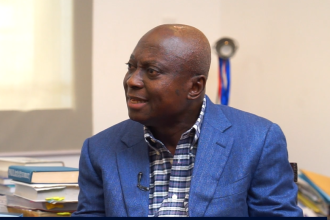
Prosecutors accuse the accused persons of transferring mineral rights without the required approval from the sector minister and facilitating mining operations without the necessary authorisation.
The prosecution contends that the accused allowed another miner to operate on the concession without following the legal processes governing mining rights in Ghana.
Lawyers for Chairman Wontumi, led by Andy Appiah-Kubi, had earlier urged the court to dismiss the case, arguing that the prosecution failed to prove the essential elements of the alleged offences.
The defence insisted that prosecutors had not established any formal transfer of mining rights between Wontumi and a miner identified as Henry Okum.
They further argued that witness testimony claiming Wontumi authorised operations on the concession did not amount to proof of a transfer of mineral rights and should be treated as hearsay.
Counsel also maintained that the state had failed to demonstrate that any mining activities carried out on the concession lacked ministerial approval.
State prosecutors rejected those claims and maintained that the evidence presented during the trial clearly established the elements of the alleged offences.
In support of its case, the prosecution called four witnesses who testified about mining activities at the Samreboi concession and the circumstances under which operations were conducted.
The first prosecution witness, Michael Gyedu Ayisi, an artisanal miner who served as a site supervisor, told the court that he worked under Henry Okum on the concession.
He said he believed the concession belonged to Chairman Wontumi based on information given to him by Okum.
However, under cross-examination, Ayisi admitted he had no documentary evidence linking Wontumi to any formal assignment of the concession. He also told the court that he had never met the NPP chairman or seen him at the mining site.
Henry Okum, who testified as the second prosecution witness, told the court that he entered into a verbal agreement with Wontumi to carry out land reclamation and mining activities on the concession.
He acknowledged that the arrangement was not backed by any written contract, deed of assignment or ministerial approval.
Another witness, Detective Chief Inspector Sarfo Asiedu Kwasi, testified about police investigations into mining operations around Samreboi and sections of the Tano Nimiri Forest Reserve.
According to him, a police operation in the area led to the arrest of 29 suspects. Officers also seized excavators, gold, firearms, ammunition and cash during the exercise.
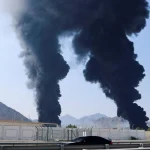
The court admitted several exhibits including caution statements, charge statements, photographs, mining lease documents and a fire report.
The final prosecution witness, Joseph Iroko, Senior Manager for Legal Affairs at the Minerals Commission of Ghana, explained the legal framework governing mineral concessions.
He told the court that under Ghanaian law, any transfer, assignment or sublease of a mineral right requires prior written approval from the minister responsible for mines, following an application submitted through the Minerals Commission.
Iroko said a search of the Commission’s records revealed no application or ministerial approval indicating that Akonta Mining had assigned or transferred the Samreboi concession to Henry Okum.
According to him, without such approval, any alleged transfer cannot be legally recognised. With the dismissal of the submission of no case, the court has now called on Wontumi and the other accused persons to present their side of the story.
They may choose to testify, call witnesses or remain silent as permitted under the law. The case has been adjourned to 26 March 2026 for the defence to begin its case.