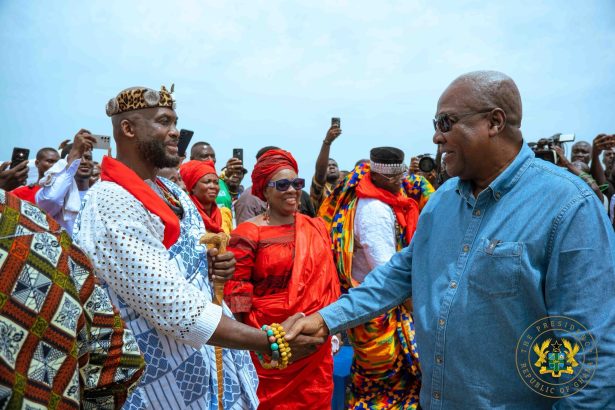
President John Mahama has assured residents in Ghana’s coastal communities that construction under the West Africa Coastal Areas (WACA) project will begin soon, as the government moves to accelerate efforts to tackle persistent coastal erosion.
“Very soon, you’ll see that work will start on your coastal area,” he said during a visit to affected communities in the Volta Region, underscoring the government’s commitment to fast-tracking the long-awaited intervention.

The President explained that the project has progressed through critical preparatory stages and is currently at the design phase. “The feasibility study is finished. They are at the design stage. After the design stage, they’ll do the procurement. That is the actual construction of the WACA project,” he stated.
The WACA initiative, backed by the World Bank with a $150 million funding envelope, aims to protect vulnerable stretches of Ghana’s coastline, particularly in areas such as Ketu South and parts of Anloga.
Planned interventions include the construction of sea defence systems, the installation of groynes to reduce the impact of strong waves, and ecosystem-based measures such as mangrove restoration and coconut tree planting to stabilise the shoreline.
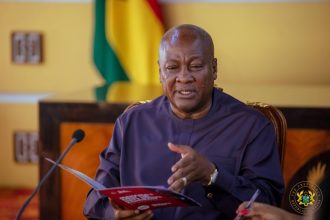

Explaining the engineering approach, Mr Mahama said groynes would be constructed into the sea to break wave currents and reduce their intensity before reaching the coast. He added that nature-based solutions would complement the hard infrastructure.
“There will also be planting of coconut trees on the beaches in order to stabilise the soil. They would also help with planting of mangroves in the estuary to defend the land against the sea’s encroachment,” he said.
The President acknowledged that the project experienced delays in 2024 due to the election period but noted that implementation has since resumed. He emphasised that funding for the initiative remains intact.
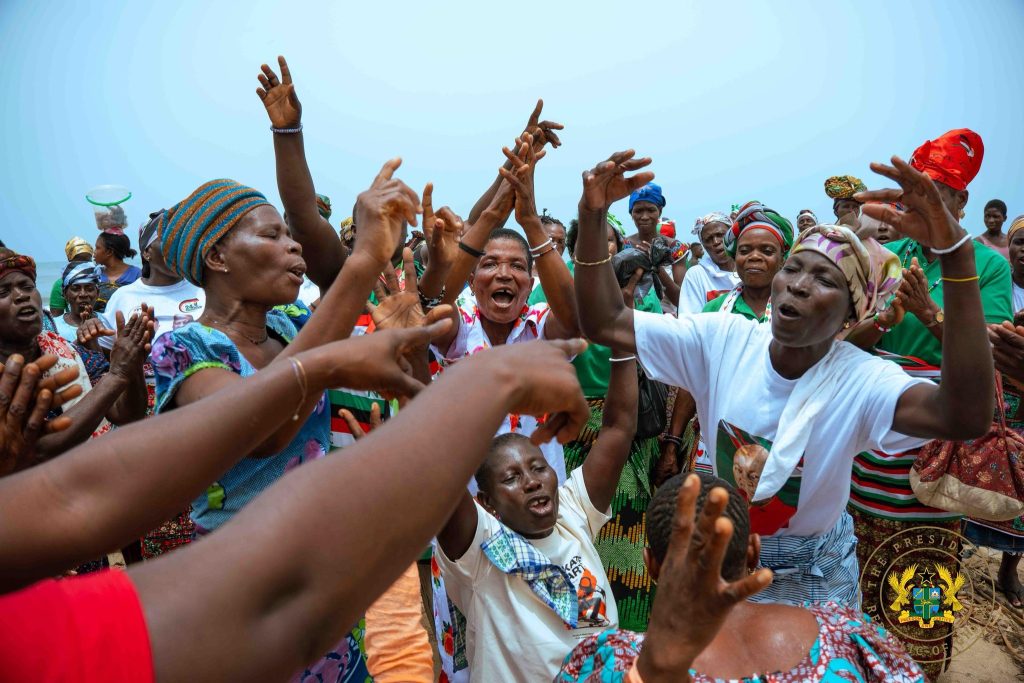
“So your money is safe, and the project is going to go on,” he assured, adding that although some World Bank-funded projects had been repurposed, the WACA allocation had been preserved to ensure continuity.
As part of interim measures, the government plans to collaborate with the Volta River Authority to dredge estuaries in affected areas, easing pressure on the coastline.
“Normally, when the estuary is silted, it looks for ways to join the sea in other places. If we dredge it, it allows more water to flow out into the sea,” he explained.
He said the short-term interventions are intended to mitigate immediate impacts while awaiting the full rollout of the WACA project.
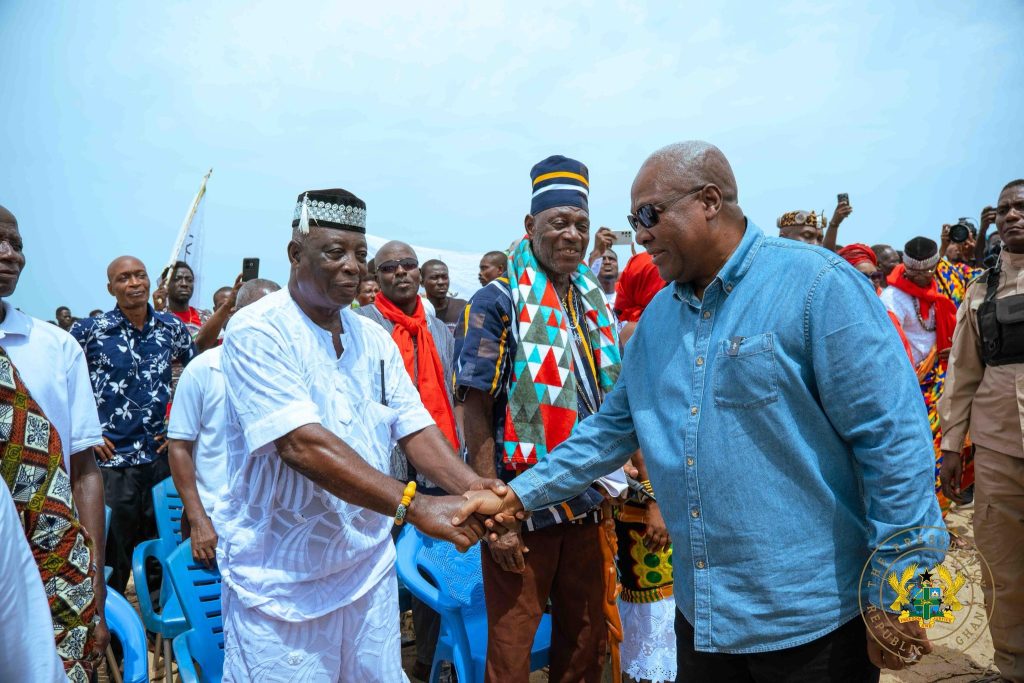
President Mahama concluded by urging residents to cooperate with authorities and reaffirmed the government’s commitment to delivering sustainable, long-term solutions to coastal erosion.