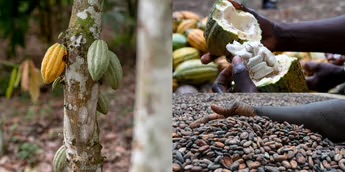
Ghana recorded $3.28 billion in non-traditional export earnings in 2025, driven by strong growth in cocoa processing and other value-added products, according to the Ghana Export Promotion Authority (GEPA).
The figure represents a 53% increase from about $1.59 billion recorded in 2024, with the top ten export products accounting for 65.48% of total non-traditional export earnings. Average value per product within the top tier stood at approximately $242 million.
GEPA described the performance as evidence of a structural shift in Ghana’s export strategy, moving away from raw material exports towards processed and semi-processed goods.
Cocoa processing remained central to this transition, with cocoa paste emerging as the single largest export earner. The product generated $789.3 million in 2025, representing a 70.97% year-on-year increase.
Other cocoa derivatives recorded even stronger growth. Cocoa butter exports rose to about $469 million, reflecting a 120.18% increase, while cocoa powder reached approximately $173 million, up 112.97%.

Overall, the cocoa sector generated about $3.69 billion in export earnings, marking what GEPA described as a milestone in Ghana’s value-added export agenda.
Beyond cocoa, agricultural diversification contributed to the growth in non-traditional exports. Cashew nuts generated roughly $219 million, while shea products also posted strong performance, with shea nuts reaching about $131 million and shea oil approximately $129 million.
Industrial and manufactured goods also played a significant role. Articles of plastics generated about $203 million, aluminium products reached approximately $121 million, and canned tuna exports rose to around $157 million.
Collectively, processed and semi-processed goods accounted for more than 83% of total export earnings, underscoring Ghana’s shift towards industrial production.
However, iron and steel exports recorded a slight decline to about $233 million, attributed to global price volatility and increased competition on the international market.
In terms of export destinations, Europe remained Ghana’s dominant market, with the Netherlands, the United Kingdom and France identified as key trading partners.
Intra-African trade also expanded, accounting for 30.36% of total non-traditional export earnings, supported by demand within the Economic Community of West African States.
GEPA Chief Executive Francis Kojo Kwarteng Arthur said the figures reflect Ghana’s growing competitiveness, particularly within regional markets, and highlighted ongoing initiatives such as the Accelerated Export Development Programme to improve production capacity and standards.
The data was presented at the launch of the 2025 Non-Traditional Export Statistics Report on 17 April 2026, pointing to an economy increasingly anchored in value addition and industrialisation.