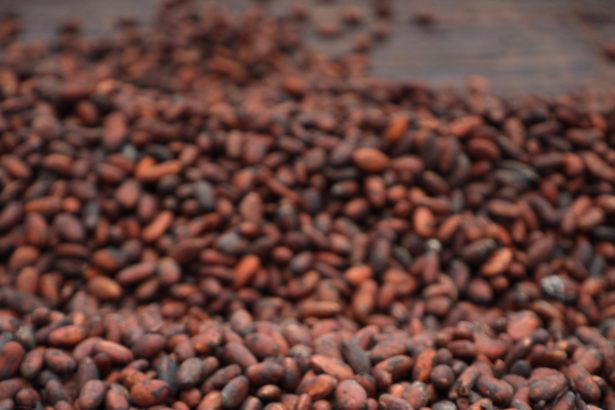
The government is targeting domestic processing of at least 50 per cent of Ghana’s cocoa production as part of efforts to reduce dependence on raw commodity exports, Trade, Agribusiness and Industry Minister Elizabeth Ofosu-Adjare has said.
The move follows a sharp decline in global cocoa prices from about US$10,000 per tonne in early 2025 to approximately US$4,000 in early 2026, which the minister said exposed the risks of relying heavily on raw commodity exports.
Speaking at the opening of the EU-Ghana Agribusiness Exhibition Forum and Trade Mission 2026, Ofosu-Adjare said the price decline highlighted the need for Ghana to retain more value from its agricultural produce through local processing.
“When global cocoa prices collapsed from their historic peak of US$10,000 per tonne in early 2025 to approximately US$4,000 by early 2026, it exposed with brutal clarity the vulnerability of an economy that exports raw commodities and leaves their value creation to others,” she said.
She said the government’s target would be supported by installed cocoa grinding capacity exceeding 500,000 metric tonnes.

The minister cited the growth in non-traditional exports as evidence of the benefits of value addition to the economy.
Ghana’s non-traditional exports reached a record US$5 billion in 2025, representing a 30.7 per cent increase over the previous year.
Processed and semi-processed products accounted for US$3.9 billion, recording a growth of 52.78 per cent, with cocoa derivatives such as paste, butter and powder emerging as the largest contributors.
Ofosu-Adjare said the government intended to extend the gains from local processing to other agricultural commodities, including cashew, fruits, vegetables, cassava, maize, rice and oil palm.
She called for increased investment in processing, packaging and export-oriented manufacturing to strengthen the competitiveness of Ghanaian products.
The minister also urged European investors to move beyond traditional buyer-seller arrangements and explore joint ventures, processing facilities, technology transfer and supply-chain partnerships with Ghanaian businesses.
She disclosed that the government, through the Ministry and the Free Zones Authority, had begun work on an industrial park at Afienya in Tema, which is available to investors interested in establishing manufacturing operations.
The EU-Ghana Agribusiness Exhibition Forum and Trade Mission 2026 is intended to promote investment, technology transfer and commercial partnerships between Ghanaian and European businesses.