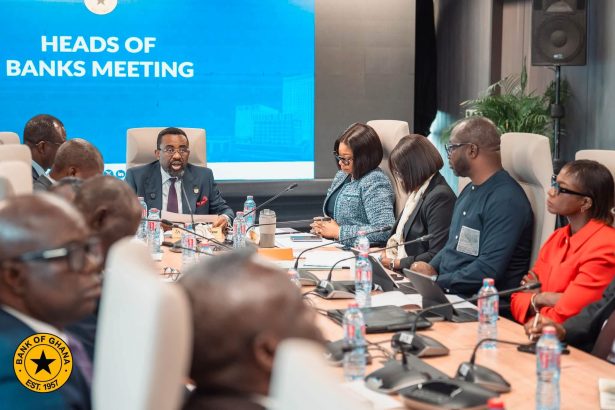
Bank of Ghana Governor Johnson Pandit Asiama has challenged commercial banks to develop investment products that will encourage Ghanaians living abroad to channel more of their remittances into savings and productive investments.
Dr Asiama made the call on Wednesday, 12 August 2026, when he met with heads of banks at the Bank Square.
He said Ghana’s improving macroeconomic conditions provide an opportunity for the banking sector to play a more active role in driving economic growth rather than focusing solely on financial stability.
According to the Governor, the economy recorded real Gross Domestic Product (GDP) growth of 6.4% in the first quarter of 2026, driven mainly by the services and industry sectors.
He also disclosed that headline inflation declined further to 4.6% in July 2026, from 5.3% in June, supported by a slowdown in food inflation and relative stability in the exchange rate.
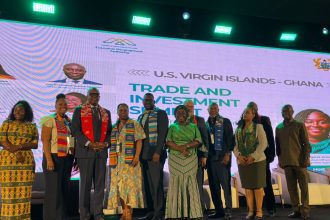
Against this backdrop, Dr Asiama urged banks to leverage digital and mobile platforms to make it easier for Ghanaians in the diaspora to save and invest in the domestic economy.
The discussions formed part of efforts to support the development of a national remittance strategy aimed at ensuring that remittances contribute more directly to economic development.
Dr Asiama called on banks to move beyond conventional remittance transfer services and introduce dedicated investment products tailored to the needs of the Ghanaian diaspora.
He said such products could help redirect remittance flows towards savings, investments and other productive economic activities.
The Governor stressed that the banking sector must ensure that improved economic stability translates into tangible opportunities for businesses and households.
“A resilient banking sector must do more than preserve stability; it must actively translate that stability into opportunities across the economy,” he said.
The call comes as Ghana seeks to maximise the development impact of remittances by creating more avenues for funds sent by citizens abroad to support investment, enterprise and long-term economic growth.
The Bank of Ghana’s engagement with bank executives is therefore expected to strengthen collaboration between the central bank and financial institutions in developing products and platforms that can mobilise diaspora capital for productive use.