President John Dramani Mahama has warned that the withdrawal of United States foreign aid programmes, particularly in the health sector, could result in up to nine million preventable deaths across Africa by 2030 while pushing millions more into poverty.
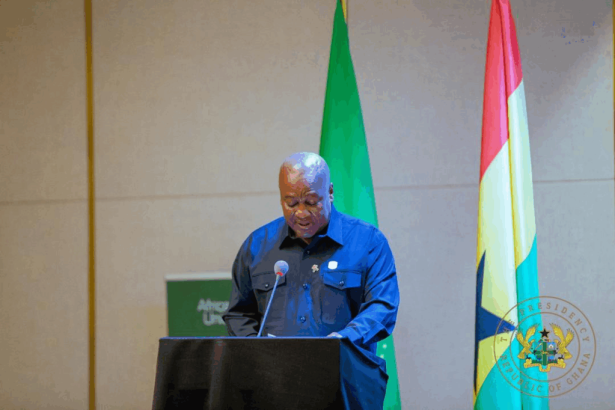
Speaking at the 79th World Health Assembly on Monday, 18 May, President Mahama said disruptions in global health financing are already weakening healthcare systems across several African countries and threatening gains made in disease prevention and treatment.
“We’re told that by 2030, nine million preventable deaths could occur due to these shifts,” the President stated.
Mr Mahama further cautioned that the economic consequences of the aid reductions could be severe, with estimates indicating that about 5.7 million Africans may be pushed into poverty by the end of 2026 as a direct result of declining aid flows.
According to him, the situation reflects a broader restructuring of global development assistance following the formal closure of operations of the United States Agency for International Development (USAID) on 1 July 2025 after more than six decades of humanitarian and development support across Africa.
President Mahama said the decision, linked to the United States’ “America First” policy direction and internal efficiency reviews, has created major gaps in health, education and social protection systems across developing countries.
He noted that several African governments are now being forced to urgently reassess their development financing and public health strategies.
Citing developments in South Africa, President Mahama said the abrupt withdrawal of funding under the United States President’s Emergency Plan for AIDS Relief (PEPFAR) had reportedly led to the closure of clinics, suspension of gender-based violence programmes and uncertainty over treatment continuity for approximately 1.4 million people living with HIV.
The President used the platform to reiterate the need for stronger and more self-reliant healthcare systems across Africa as countries confront growing uncertainty in global donor support.