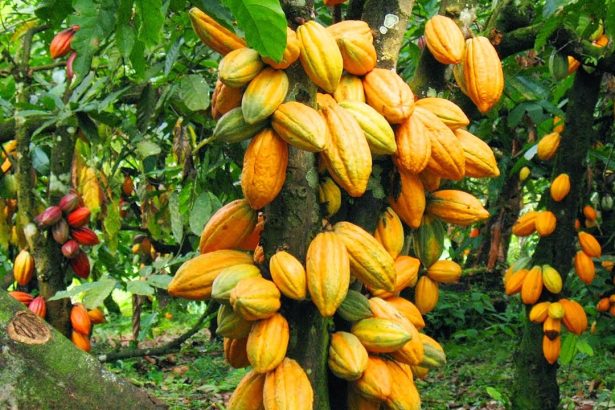
The World Bank is committing about $75 million to support the rehabilitation of cocoa farms in Ghana, as the country’s key export sector grapples with disease outbreaks and declining yields.
The funding, channelled through the West Africa Food Systems Resilience Programme (FSRP), will target approximately 25,000 hectares of cocoa farms affected by disease and poor productivity.
Speaking at a Civil Society Organisation engagement on food security in Accra, Agricultural Economist at the World Bank Ghana, Dr Ashwini Sebastian, disclosed that the initiative is backed by grant financing mobilised with support from development partners, including the Norwegian government.
She explained that the intervention is designed not only to restore cocoa farms but also to strengthen the broader agricultural value chain and improve farmer livelihoods.
“We are deploying grant resources through the programme to support key agricultural sectors, including cocoa,” she said, adding that an initial 5,000 hectares is expected to be rehabilitated by July.

The rehabilitation exercise will involve the replacement of old and diseased cocoa trees with improved, high-yielding and disease-resistant varieties, as well as the adoption of modern farm management practices.
Dr Sebastian further indicated that the programme extends beyond cocoa, with pilot initiatives underway to develop resilient seed systems, particularly in northern Ghana, where farmers are being introduced to crop varieties suited for dry season cultivation.
Additionally, cashew seedlings are being distributed to farmers to promote crop diversification and cushion incomes.
Ghana’s cocoa industry—long regarded as a backbone of the economy—has been under strain due to swollen shoot disease, ageing tree stock and the growing impact of climate variability.
Experts warn that without sustained investment in rehabilitation and innovation, output could continue to decline, with implications for export earnings and rural livelihoods.
The World Bank maintains that the intervention is critical to restoring productivity, safeguarding farmer incomes and reinforcing the resilience of Ghana’s agricultural sector.