President John Dramani Mahama has challenged Africans at home and in the diaspora to reclaim the distorted and suppressed histories of slavery and colonialism, insisting that truth-telling is essential to unity, dignity and Africa’s future place in the world.
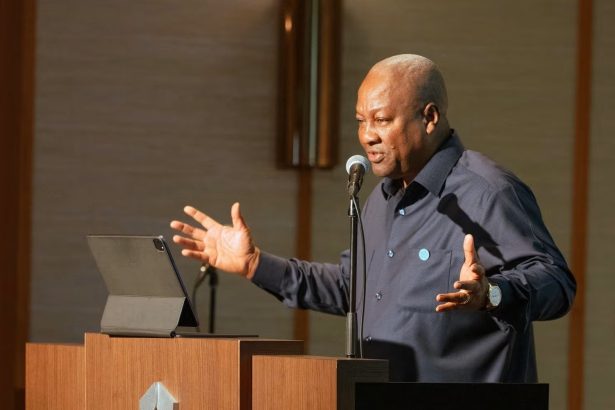
Addressing the Diaspora Summit 2025 on Friday, December 19, at the Accra International Conference Centre (AICC), President Mahama said Africa’s story has for centuries been written by those who dominated the continent, leaving the voices of its people buried or erased.
He reminded the gathering that Ghana’s coastline, marked by dozens of slave forts and castles, served as a central exit route for millions of enslaved Africans. Those sites, he said, turned the Gulf of Guinea and the Atlantic Ocean into “a graveyard of our ancestors.”
According to the President, captives drawn from different parts of West Africa were forced to endure days-long marches to coastal dungeons before being transported across the Atlantic as human cargo.
President Mahama traced part of this tragic history to the Volta River estuary, explaining how Portuguese sailors used the “volta do mar” navigation system to turn their vessels and ride Atlantic winds and currents more efficiently to the Americas—while enslaved Africans were packed beneath the decks.
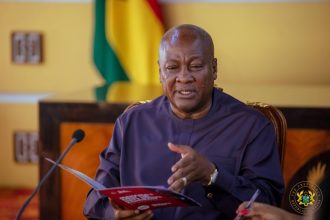
He stressed that the stories of those who were taken away are inseparable from Ghana’s national narrative and must be recognised alongside the experiences of those who remained and lived under colonial domination.
Questioning how history has been documented, the President argued that power has always dictated which accounts survive. He urged Africans and their descendants to interrogate whose voices were silenced so others could be elevated, and to consciously retrieve those missing narratives.
Owning the full truth of Africa’s past, he said, gives Africans the moral authority to write themselves “truthfully and respectfully” into the future of humanity.
President Mahama also condemned the deep divisions imposed by colonial borders that fractured ethnic homelands, as well as racist ideologies that portrayed certain African groups as inferior. These injustices, he warned, persist today through stereotyping and a continuing “war of images” that casts Africans as primitive.
He called on Africans everywhere to reject these narratives and use their reclaimed history as a rallying point for solidarity, self-definition and collective progress.