The World Health Organization has declared the ongoing Ebola outbreak in Democratic Republic of the Congo and Uganda a global health emergency following the rapid spread of infections and fears that the true scale of the outbreak could be far worse than currently reported.
The declaration, announced on Saturday, came just a day after Africa’s leading public health authority linked an outbreak in northeastern Congo to dozens of suspected deaths.
The W.H.O. confirmed that cases had now been detected in Kinshasa and Kampala — the capital cities of Congo and Uganda — heightening concerns over possible urban transmission.
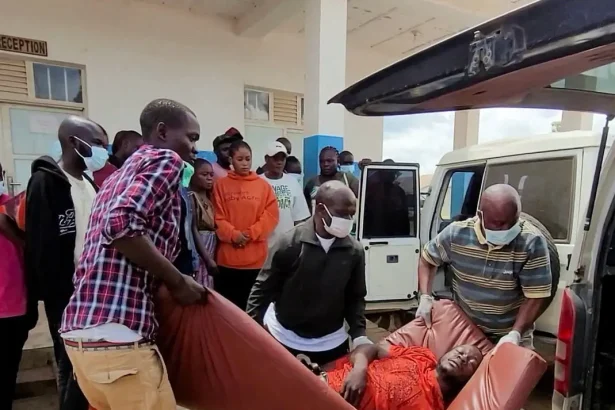
According to the agency, 246 suspected cases and 80 deaths linked to the virus have been reported in Congo’s Ituri province, where the outbreak was first identified. However, only eight cases have so far been laboratory-confirmed.
Health officials say the outbreak involves the Bundibugyo species of Ebola, for which there is currently no approved vaccine or treatment.

The W.H.O. warned that there were “significant uncertainties” surrounding both the number of infections and the geographic spread of the virus, adding that the outbreak may already be much larger than detected.
The declaration of a “Public Health Emergency of International Concern” is intended to trigger a coordinated international response and encourage countries to mobilise vaccines, medical supplies, surveillance systems and emergency funding.
Despite the seriousness of the outbreak, the W.H.O. clarified that the situation does not yet meet the threshold for a pandemic-level emergency similar to the COVID-19 crisis.
In Uganda, health authorities confirmed two Ebola cases in Kampala, including one death. Officials said the infections appeared unrelated, although both patients had travelled from Congo within a 24-hour period.
Ugandan authorities earlier disclosed that a 59-year-old Congolese national had been admitted to a Kampala hospital on 11 May and died three days later.
A separate confirmed case in Kinshasa involved an individual returning from Ituri province.
The W.H.O. said suspected Ebola cases had been reported across at least three health zones in Ituri, including Rwampara, Mongbwalu and Bunia, while additional suspected infections were also emerging in neighbouring North Kivu province.
The agency warned that the outbreak risk was being worsened by insecurity, large-scale population movement and weak health systems in affected areas.
Containing Ebola outbreaks typically depends on rapid isolation of cases, contact tracing, safe burials and early treatment. The virus spreads through direct contact with bodily fluids of infected persons, placing relatives and caregivers at high risk.
However, the political and security situation in Ituri has complicated response efforts.
President Félix Tshisekedi imposed a state of siege in the province in 2021 following repeated attacks by armed groups, including the Allied Democratic Forces.
Human rights groups say continued violence and governance failures have weakened public trust in authorities and undermined access to healthcare services.
The outbreak has also reignited concerns over cuts to international health funding.
The U.S. Agency for International Development (USAID), which played a key role in responding to previous Ebola outbreaks, was reportedly shut down last year by the Trump administration. Funding reductions also affected the U.S. Centers for Disease Control and Prevention, while the United States withdrew from the W.H.O. earlier this year.
Uganda has meanwhile postponed its annual Catholic pilgrimage near Kampala, originally scheduled for 3 June, over fears the event could accelerate cross-border transmission.
President Yoweri Museveni announced that the festival would be suspended “to safeguard everyone’s lives” and urged travellers already en route to return home and observe health precautions.
Uganda’s Health Minister, Jane Ocero, said the country had strengthened surveillance systems and deployed community health workers to monitor and report suspected cases.
The outbreak has revived memories of the 2014–2015 Ebola epidemic in West Africa, which killed more than 11,000 people across Guinea, Sierra Leone and Liberia.
W.H.O. Director-General Tedros Adhanom Ghebreyesus said the organisation was first notified about suspected Ebola cases on 5 May and immediately dispatched investigation teams to Ituri.
Initial samples reportedly tested negative because field equipment was designed to detect only the Zaire strain of Ebola — the only strain with a licensed vaccine.
Further testing conducted at the National Institute of Biomedical Research in Kinshasa later confirmed positive Ebola results on Thursday.
Medical charity Doctors Without Borders said it was preparing to rapidly expand its operations in Ituri amid fears the outbreak could spread further across Central and East Africa.