The United States has imposed visa restrictions on South Africans accused of promoting racial discrimination against the country’s white minority, further escalating tensions between Washington and Pretoria.
US Secretary of State Marco Rubio announced the restrictions on Tuesday, saying the South African government had failed to adequately address concerns previously raised by the United States.
He said the restrictions would target individuals accused of promoting “race-based discrimination,” inciting violence or enabling land confiscation without compensation in South Africa.
Rubio did not immediately identify the individuals who would be affected by the restrictions.
“The South African government has not adequately addressed previously raised concerns,” Rubio said in a statement announcing the measures.
More Read

In a separate social media post, Rubio accused the South African government of pursuing what he described as “racial grievance against the Afrikaner minority” and said those responsible for injustices against the minority would have no place in the United States.
“The United States will not allow such behaviour to go unchecked,” he said.
The US Embassy in Pretoria said Washington believed dialogue with South Africa had reached an impasse and accused Pretoria of failing to demonstrate a commitment to strong bilateral relations.
It described the visa restrictions as “only the first step” in a series of measures intended to demonstrate what it called America’s resolve on the issue.
The South African government had not immediately responded to the latest restrictions.
Tensions over race and land policy
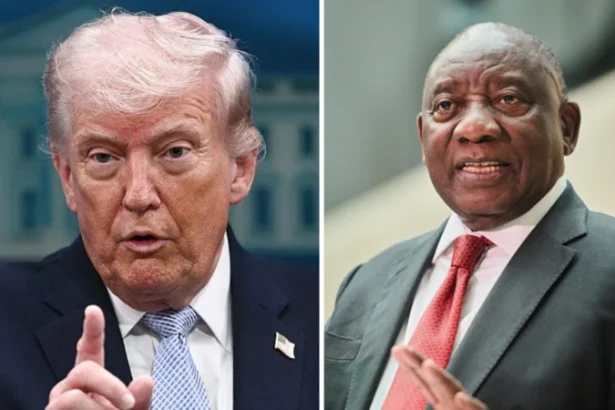
Relations between the two countries have deteriorated since President Donald Trump returned to office, with Washington raising concerns over South Africa’s policies on racial inequality, land reform and the treatment of Afrikaners.
Trump has repeatedly accused South Africa of discriminating against white South Africans, particularly Afrikaners, who are largely descendants of Dutch and French settlers.
The South African government has consistently rejected the allegations, including claims that white farmers are being persecuted or subjected to genocide.
South Africa says its land reform policies are intended to address inequalities created during apartheid, when the Black majority was systematically denied land and other rights.
A land reform law signed by President Cyril Ramaphosa allows the state, under certain circumstances, to expropriate property in the public interest without compensation. However, the legislation also requires authorities to first attempt to reach an agreement with property owners, while disputes can be taken to court.
Land ownership remains a highly sensitive issue more than three decades after the end of apartheid. White South Africans make up just over 7% of the country’s population but continue to own a significant share of private farmland.
South African political parties, including those representing Afrikaners and the wider white community, have not supported claims that a genocide is taking place against white South Africans.
South Africa has also pointed to crime statistics and disputed claims that white people are disproportionately targeted because of their race.
Broader diplomatic fallout
The latest restrictions follow several measures by the Trump administration that have strained relations with Pretoria.
In 2025, Trump cut US aid to South Africa, expelled the country’s ambassador and offered refugee status to white South Africans who said they were facing racial discrimination.
A group of 59 white South Africans later travelled to the United States under the programme.
Ramaphosa rejected claims that white South Africans were being persecuted and criticised those who left the country, arguing that South Africans should remain and work to address the country’s problems.
Trump also announced that the United States would not participate in the G20 summit hosted by South Africa, describing the decision to hold the meeting there as a “total disgrace”. South Africa’s Foreign Ministry described the move as regrettable.
The dispute intensified after Ramaphosa’s visit to the White House in May 2025, when Trump confronted him over allegations of attacks against white South African farmers. The evidence presented by Trump was subsequently widely disputed.
In August, the Trump administration imposed a 30% tariff on South African goods entering the US, the highest rate imposed on a sub-Saharan African country.
The latest visa restrictions were imposed under a provision of US immigration law that allows the Secretary of State to restrict the entry of foreign nationals whose presence in the United States is considered potentially harmful to US foreign policy interests.