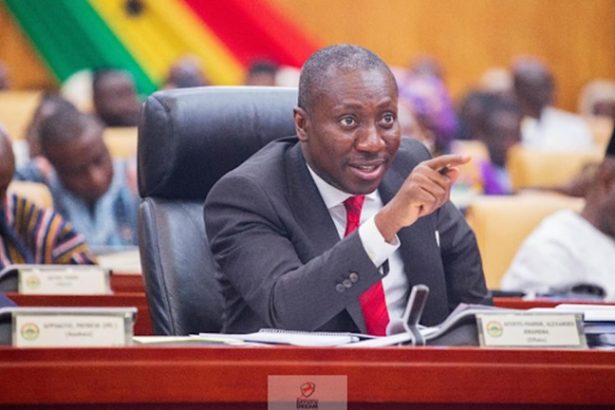
The Chief Executive Officer (CEO) of the Ghana Gold Board (GoldBod), Sammy Gyamfi, has levelled a serious allegation against the Minority Leader in Parliament, Alexander Afenyo-Markin, accusing him of extortion.
The allegation appears to have arisen from Mr Afenyo-Markin’s criticism of the GoldBod’s Domestic Gold Purchase Programme (DGPP), following claims that the International Monetary Fund (IMF), in its latest report, indicated that GoldBod incurred losses of approximately GH¢22 billion, or about US$1.7 billion, under the programme in 2025.
While the political debate over the financial performance of the DGPP is legitimate and should be encouraged, the allegation of extortion is of an entirely different nature. Extortion is a criminal offence, and therefore such an allegation cannot simply be dismissed as another episode in Ghana’s increasingly heated political discourse.
We therefore expect the appropriate law-enforcement agencies, particularly the Office of the Special Prosecutor (OSP) and the Economic and Organised Crime Office (EOCO), to take an interest in the matter and establish the facts.
If Mr Gyamfi has evidence that the Minority Leader attempted to extort money, that evidence must be placed before the appropriate authorities for investigation. Equally, if the allegation is without foundation, Mr Afenyo-Markin deserves to have his name cleared.

If Mr Afenyo-Markin is demanding answers from Mr Gyamfi and GoldBod over allegations of financial losses running into billions of cedis, then he too must be prepared to answer questions about any allegation of wrongdoing levelled against him.
Ghanaians deserve nothing less than the truth.
This is not merely a political quarrel between two prominent public figures. Allegations of this nature strike at the heart of public confidence in Ghana’s political institutions. If politicians are able to use their positions or influence to extort money from one another, then the ordinary Ghanaian has every reason to fear what happens to citizens who have neither political power nor access to the corridors of authority.
We are no longer in normal times. Ghana cannot afford a political culture in which serious allegations of criminal conduct are traded publicly, only to be forgotten when the headlines fade.
The appropriate institutions must therefore investigate this matter thoroughly, independently and without fear or favour. If a crime has been committed, the law must take its course. If no crime has been committed, the allegation must be put to rest.
What Ghana does not need is another political spectacle. What the country needs is accountability, transparency and the assurance that no politician is above scrutiny.