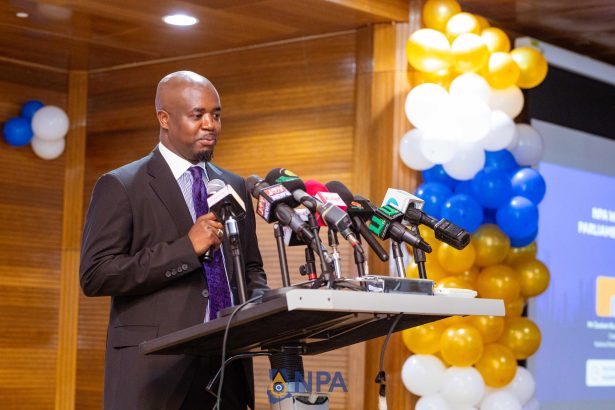
The Chairman of Parliament’s Energy Committee, Emmanuel Kwasi Bedzrah, has commended the National Petroleum Authority (NPA) for its openness and consistent engagement with the committee.
He said such interactions were vital for strengthening parliamentary oversight and ensuring that key state institutions remain responsive to national needs, while also praising the Authority for its continued support to Parliament.

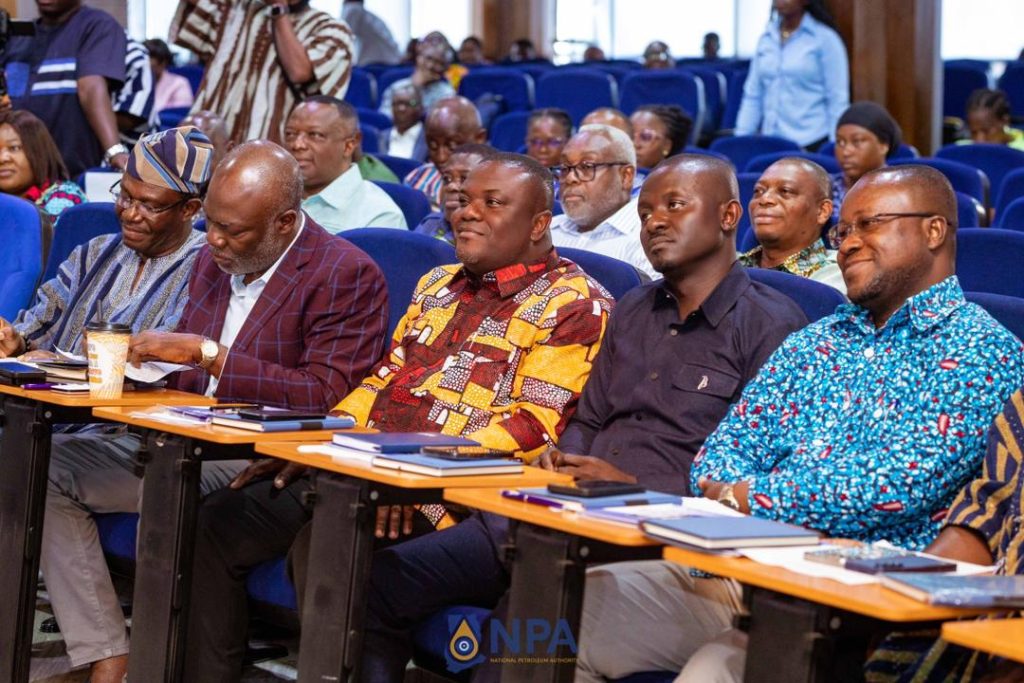
Mr Bedzrah made the remarks on Wednesday when he led members of the committee on a monitoring visit to the Authority in Accra.
The visit formed part of the committee’s constitutional mandate to inquire into the activities of the NPA, including its regulatory processes, quality and price enforcement, health and safety standards within the industry, and consumer protection measures.
In his welcome address, the NPA Chief Executive, Godwin Kudzo Tameklo, underscored the central role of the downstream petroleum sector in everyday life.

“Everything in our daily lives is connected to the petroleum downstream,” he said. “Parliament, through the NPA Act of 2005, entrusted us with the sole responsibility of regulating this space. Your visit here today reflects the importance of that responsibility and the need for continued oversight.”
Mr Tameklo noted that the Authority’s engagement with Parliament had been consistent and constructive, particularly in relation to budget approvals and the development of regulatory policies.

He disclosed that a new legislative framework was under consideration to respond to the evolving nature of the industry and to better position the Authority to promote growth, innovation and efficiency.
The NPA Chief Executive outlined the breadth of the Authority’s mandate, which spans the entire downstream value chain — from the importation of petroleum products to their distribution and retail. This includes the licensing of activities such as bunkering, refinery development, and the construction and operation of filling stations.
He stressed that compliance remained non-negotiable. “Operating without a licence is a clear violation of the law, and the Authority is committed to enforcing regulations with consistency, integrity and fairness,” he said.
Mr Tameklo added that consumer protection and fuel quality assurance remained key priorities, particularly through the Fuel Marking Scheme, which helps detect and prevent fuel adulteration across the supply chain. This is reinforced by routine and unannounced inspections of filling stations, alongside continuous monitoring to ensure adherence to established standards.
On pricing, he explained that the Uniform Petroleum Pricing Policy ensures that the higher cost of transporting fuel to northern parts of the country is absorbed within a single national pricing structure, thereby preventing regional disparities and guaranteeing equitable access for consumers.
The visit was further enriched by a series of detailed presentations from the Authority’s directors, each offering a window into the systems and processes that underpin the regulation of the downstream sector.