The National Petroleum Authority (NPA) has commenced stakeholder consultations on draft guidelines intended to standardise how Petroleum Service Providers (PSPs) manage consumer complaints across Ghana’s petroleum downstream sector.
The proposed Consumer and Public Complaints Procedure Guidelines (CPCPG) also set out the official channels available to consumers for lodging complaints when dealing with PSPs.
The draft guidelines have been prepared by an 11-member working group, sanctioned by the Authority, and aim to establish a unified and transparent framework for resolving grievances in the sector.

The first stakeholder consultation took place on Monday, 15 July 2025, and was chaired by Awuku Larbi, Esq., the head of the working group. The session brought together representatives from key industry bodies and consumer advocacy organisations.
Institutions represented included the Chamber of Oil Marketing Companies (COMAC), the Chamber of Petroleum Consumers (COPEC), the Consumer Protection Agency (CPA), the Institute for Energy Security (IES), and various departments within the NPA.
More Read
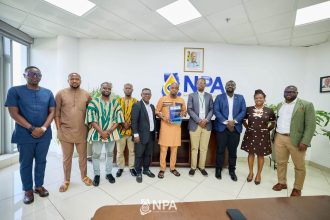
The meeting provided a forum for participants to scrutinise the draft guidelines, offer feedback, and propose amendments ahead of the final version, which will be gazetted and implemented across all PSPs nationwide.

A second round of stakeholder consultations is scheduled for Monday, 22 July 2025. That session will engage additional actors, including the Consumer Unity and Trust Society (CUTS), African Centre for Energy Policy (ACEP), Ghana Private Road Transport Union (GPRTU), Progressive Transport Owners Association (PROTOA), and the Ghana Online Drivers Union, comprising drivers from Bolt, Yango, Shaxi, and Uber.
According to the NPA, these engagements are crucial to ensuring that the finalised CPCPG addresses the real-world concerns of consumers, industry operators, and civil society actors alike.
This initiative forms part of the Authority’s broader agenda to strengthen consumer protection, promote transparency, and reinforce accountability across Ghana’s petroleum downstream industry.