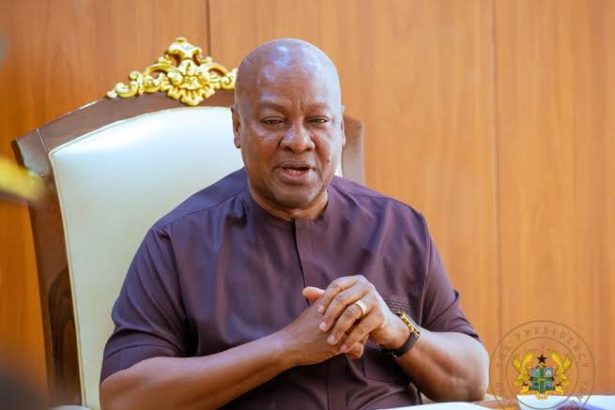
The Presidency has published the findings of a 72-page investigative report into allegations of abuse of the single-sourcing procurement method in the award of road contracts under the government’s Big Push Initiative, following claims published by the Fourth Estate and the Media Foundation for West Africa.
The Minister of Government Communications, Felix Kwakye Ofosu, on Monday, rejected claims that road contract awards under the Ministry of Roads and Highways were dominated by sole-sourcing, stating that more than 90 per cent of projects were awarded through competitive tendering.
According to the Presidency, the report was commissioned after it received correspondence dated 1 April 2026 from the Media Foundation for West Africa, which referenced investigative publications by the Fourth Estate alleging widespread misuse of single-sourcing in the Ministry of Roads and Highways.
President John Dramani Mahama subsequently referred the matter on 2 April 2026 to the Senior Presidential Advisor on Governmental Affairs for investigation into the veracity of the claims and appropriate remedial action.
The Ministry of Roads and Highways submitted its response on 21 April 2026, while the final report was presented to the President on 22 May 2026.

The Presidency indicated that, in the interest of transparency, the full report would be published on 16 June 16, 2026, yesterday, alongside a summary of its key findings.
The report established that a total of 1,441 road contracts were awarded under the Ministry during the current administration, comprising projects implemented by the Ghana Highways Authority, Department of Feeder Roads, legacy projects, and Big Push initiatives.
Of these, 1,301 contracts representing 90.28 per cent were awarded through open or competitive tendering, while 140 were linked to the Big Push programme.
Within the Big Push component, 66 contracts were awarded through single-sourcing, 51 through restrictive tendering, and 23 were inherited legacy contracts previously awarded under single-sourcing arrangements.
The report further found that the Ghana Highways Authority, the Department of Urban Roads, and the Department of Feeder Roads secured approvals from the Public Procurement Authority Board for the use of single-sourcing and restrictive tendering, where applicable.
It concluded that single-sourcing accounted for only 4.58 per cent of the Ministry’s total contracts, arguing that competitive tendering remained the dominant procurement method.
The report said the use of single-sourcing for 47.14 per cent of Big Push contracts was justified by what it described as urgent national considerations, including accelerated infrastructure delivery, procurement efficiency, public safety concerns, and fiscal risk mitigation linked to inflation and cost escalation.
It added that the Big Push programme was designed as an accelerated infrastructure intervention to rapidly address deteriorating road conditions and support job creation.
The report concluded that the Ministry complied with the Public Procurement Act, 2003 (Act 663), as amended, and did not breach procurement regulations.
Regarding claims of inconsistencies in project figures, the report attributed the differences to varying funding sources, including the Consolidated Fund, the Road Fund, donor support, and the dedicated Big Push Fund established in 2025.
It cautioned that focusing solely on Big Push Fund allocations could present a distorted picture of total project financing.
On specific projects such as the Dodo Pepesu–Nkwanta Road, the report found that discrepancies in reported figures were due to typographical errors, noting that official commitment, authorisation and contract sums were consistent at approximately GH¢683 million.
The report also cleared concerns regarding contractor eligibility, particularly involving Growth 82 Global Limited, confirming that the company held valid classification certificates, including A1B1 status at the time of contract award.
It further clarified that the contract for the Dodo Pepesu–Nkwanta Road was awarded through restrictive tendering following evaluation of five companies, not through single-sourcing as alleged.
Addressing claims of inflated project costs, including the Winneba–Cape Coast dualisation project, the report explained that cost variations were driven by differences in scope, including viaducts, bridges, and grade-separated interchanges, rather than road length alone.
It also clarified that provisional sums allocated for administrative infrastructure, such as feeder roads and headquarters maintenance, were subject to the Ministry’s approval and were later adjusted in accordance with the Ministry of Finance’s guidance.
While clearing the Ministry of wrongdoing, the report recommended reforms to strengthen procurement oversight, including mandatory Value for Money certification for high-value single-source contracts, Cabinet approval requirements, and accelerated legislative reforms to limit administrative discretion.
It also proposed enhanced transparency by publishing procurement data and beneficial ownership details on a centralised e-procurement platform.
The report referenced the recently enacted Value for Money Office framework, assented to by President Mahama in May 2026, as a key mechanism to improve fiscal oversight while cautioning against bureaucratic delays that could undermine the speed of infrastructure delivery.
The report ultimately concluded that the Ministry of Roads and Highways acted within the law and did not abuse the single-sourcing procurement process in awarding Big Push contracts.
However, it acknowledged public concerns about single-sourcing and recommended tighter controls, enhanced transparency, and stronger institutional oversight involving the Public Procurement Authority, the Value for Money Office, and Cabinet.
It also commended the Fourth Estate’s investigative efforts for contributing to public accountability and transparency in procurement governance.