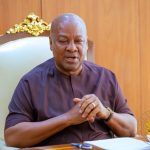



Former Member of Parliament for Assin Central, Kennedy Ohene Agyapong, has expressed disappointment over the prolonged delay in making the 500-bed Afari Military Hospital in the Ashanti Region fully operational, describing the situation as a missed opportunity to strengthen healthcare delivery in Ghana.
The former New Patriotic Party (NPP) flagbearer aspirant openly criticised successive administrations, including the Akufo-Addo government under which he served as Chairman of Parliament’s Defence and Interior Committee, for failing to complete and operationalise the facility.
Mr Agyapong made the remarks on Tuesday, 16 June 2026, shortly after donating a pickup truck and 15 motorcycles to the Ghana Police Service at the Accra Regional Police Headquarters.
His comments come amid growing political controversy surrounding the hospital project, with the Minority in Parliament continuing to raise concerns over what it describes as a sharp escalation in costs and alleged mismanagement of the Afari Military Hospital project, warning that attempts to approve new payments could amount to a “criminal” misuse of public funds.
The Afari Military Hospital, envisioned as a major referral facility serving both military personnel and civilians, has remained non-operational despite substantial investments and years of construction.

On 10 June 2026, Minority members of Parliament’s Health Committee visited the yet-to-be-operational 500-bed Afari Military Hospital and expressed concern over delays in commissioning the facility, warning that the setback was hampering efforts to improve healthcare delivery in the Ashanti Region.
The MPs criticised the Mahama administration for what they described as its failure to complete and operationalise stalled health infrastructure projects across the country and called for urgent action to bring the facilities into use.
The government, in its defence, said the contractor had demanded settlement of alleged arrears of US$85 million before returning to the site.
Mr Agyapong said the hospital project, envisioned as a major healthcare facility to serve military personnel and civilians alike, should have been completed and operational years ago, given the significant investment made in its construction.
Reflecting on the project’s history, he noted that the hospital’s foundation was laid during the administration of former President John Agyekum Kufuor, while substantial construction was undertaken under a subsequent National Democratic Congress (NDC) government.
According to him, despite inheriting the project when the NPP assumed office, the party failed to take the necessary steps to ensure its completion and operationalisation during its eight years in government.
“This hospital was started by President John Agyekum Kufuor. The locations and all those things. NDC came to start it, and when we came, I am NPP, and I am telling you the gospel truth. I was the chairman for Defence and Interior, and we didn’t do anything.
“When we decided to go and inspect Afari, they stopped us. I heard somebody saying the Afari Hospital has been there for 15 months, but we were there for eight years and didn’t do it.”
Addressing the media on Tuesday, 16 June 2026, the Member of Parliament for Atwima Kwanwoma, Kofi Amankwa-Manu, said the financial claims linked to the project were unjustifiable.
“The US$85 million is not just mathematically absurd; it is indeed criminal,” he said, arguing that the figures being discussed reflected deeper problems in the project’s financial management.
The Minority also framed the issue as part of a broader pattern of poor handling of the project over time, citing repeated cost revisions and delays.
The caucus claimed that the project’s history showed how political and administrative decisions had contributed to inflated costs.
“The Afari Hospital story is a testament to NDC mismanagement,” Mr Amankwa-Manu said, alleging that changes to the project’s location and execution timeline contributed to delays and additional financial claims by the contractor.
According to him, the project, originally contracted in 2008, was significantly delayed following changes in government and subsequent relocations, which he argued triggered additional compensation demands.
He further claimed that what began as a substantially lower contract value had escalated into a disputed figure now estimated at an additional US$85 million, which the Minority says is unacceptable.
“Let the record show that, as of December 2016, the project stood at only 40 per cent complete,” he said, adding that progress accelerated only much later before the facility eventually reached near completion.
The Minority insists that the current government must reject what it describes as inflated claims and instead focus on completing the remaining work without further financial adjustments.
“We will fiercely resist this scheme. We demand value for money, and we will protect the public purse,” Mr Amankwa-Manu said, warning that any approval of the disputed amount would amount to what he described as a “create, loot and share” arrangement.