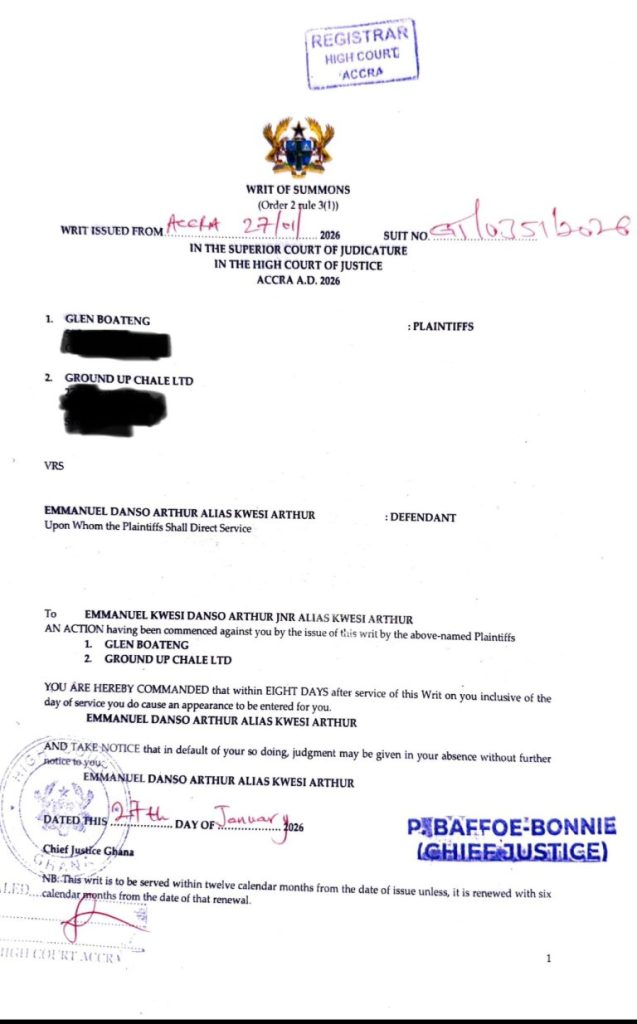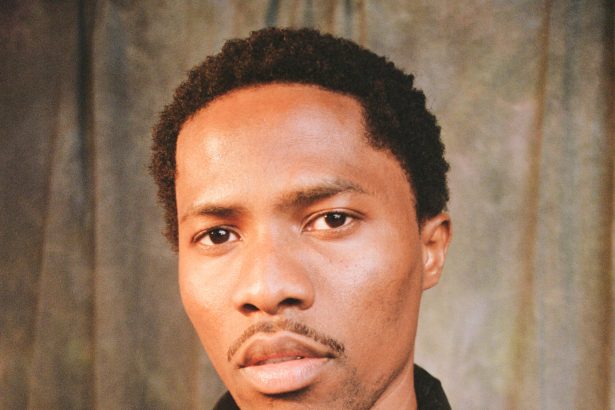
Ghanaian rapper Kwesi Arthur has been dragged to the High Court in Accra by his former management outfit, Ground Up Chale, and its founder, Glen Boateng, over what they describe as defamatory comments made by the artiste on social media.
The plaintiffs are demanding GHC10 million in damages, arguing that the statements have seriously injured their reputation within the music industry and beyond.
Beyond monetary compensation, the suit is also seeking a court order compelling the award-winning musician to delete the posts in question, desist from further commentary on the issue, and publish a public apology together with a retraction.
The lawsuit stems from a series of online allegations by Kwesi Arthur in which he accused the label of demanding US$150,000 from him before he could use his own photographs. He further claimed that Ground Up Chale had asserted ownership over his music, image, and career dating back to 2016.
In the same posts, the artiste alleged that he made no financial gains throughout his time with the company, accused management of intimidation, and suggested that the label was deliberately obstructing his current releases. He also warned that the company should be held accountable should any harm befall him.

Ground Up Chale has, however, firmly denied all accusations, describing them as misleading and damaging. According to the company, the disagreement is purely contractual and relates only to works created during the period of collaboration.
The label maintains that Kwesi Arthur benefited from royalties and other entitlements under the agreement, stressing that any limitations applied strictly to content produced under its management.
The company has indicated that a detailed public statement will soon be issued to clarify its position on the dispute.
The case has reignited broader conversations within Ghana’s creative space about the fairness of record deals, ownership of intellectual property, and the balance of power between artistes and their management teams. Industry watchers say the outcome could have far-reaching implications for how contracts are negotiated and enforced in the local music business.