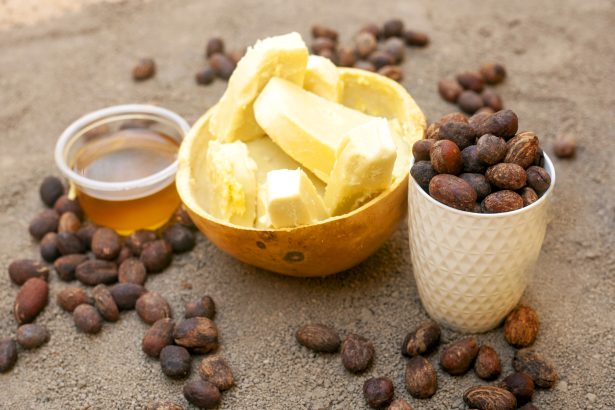
Government officials have unveiled plans to restructure Ghana’s shea industry, including possible restrictions on raw shea exports, as part of efforts to ensure local communities benefit more from the country’s growing shea economy.
The announcement was made at the opening ceremony of the World Shea Expo 2026 in Wa, where concerns were raised over Ghana’s continued dependence on imported processed shea products despite the country’s strong raw material base.
Although Ghana generated nearly GH¢1.93 billion from shea exports, officials disclosed that the country simultaneously spent about GH¢1.86 billion importing processed shea oil — a situation they described as economically unsustainable.
Speaking at the event, Director of Presidential Initiatives in Agriculture and Agribusiness at the Office of the President, Dr Peter Boamah Otokunor, said the imbalance reflects a longstanding structural challenge in the sector.
“This means that while we produce, others process and profit more. This imbalance is not sustainable, and it is exactly what we are determined to change,” he stated.

According to Dr Otokunor, government is considering phased restrictions on the export of raw shea nuts to encourage local processing, expand industrial activity and create jobs within Ghana.
He further explained that the proposed 24-Hour Economy policy is expected to support round-the-clock processing in local factories, reduce waste and increase productivity within the shea value chain.
Beyond the economic implications, Dr Otokunor stressed the social importance of the industry, particularly for women across Northern Ghana who depend heavily on shea processing and trading for survival.
“For many women across Northern Ghana, especially in this very region, the shea nut is not just a product — it is survival, it is school fees, it is healthcare, and it is hope,” he said.
Also addressing the gathering, Wa East MP and Board Chairman of the Ghana Export Promotion Authority (GEPA), Dr Godfred Seidu Jasaw, called for urgent measures to protect shea trees, warning that the sustainability of the industry depends on preserving its raw material base.
“The shea tree is a climate-resilient economic lifeline for Northern Ghana,” he noted. “If we do not jealously protect the raw material source, our processing targets and government investments will mean nothing.”
GEPA Deputy Chief Executive Officer Ambrose Edwin Nsarkoh disclosed that the global shea market is currently valued at approximately US$6.4 billion, adding that government aims to ensure at least 50 per cent of Ghana’s raw shea products are processed locally.
The target, he explained, forms part of broader efforts to increase Ghana’s non-traditional export earnings to US$10 billion by 2030.
For many women processors and farmers in Northern Ghana, the reforms are expected to determine whether the country can finally translate its vast shea resources into meaningful local economic gains.