A Syrian passenger arrested in Lebanon with 40 kilogrammes of cocaine allegedly bribed officials at the Accra International Airport to facilitate the shipment of the drugs, according to Lebanese customs sources.
The passenger, identified only by his initials B.H., was arrested at Beirut’s Rafic Hariri International Airport on Saturday, October 31, after arriving from Accra aboard Middle East Airlines flight MEA 576.
Lebanese customs sources told broadcaster LBCI that the suspect allegedly paid a bribe to enable him to check in two suitcases containing the cocaine. The sources did not disclose the amount involved or identify the officials allegedly paid.
The seizure has been described by Lebanese customs as the largest passenger drug bust in the history of Beirut airport.
According to an LBCI report published on November 1, the suspect had been promised $3,000 to transport the cocaine from Ghana to Lebanon.
Lebanese customs and General Security officers reportedly monitored his movements after receiving intelligence about his departure from Ghana.
Officers tracked him from the time he disembarked until he collected his luggage at the baggage carousel, where he was arrested.
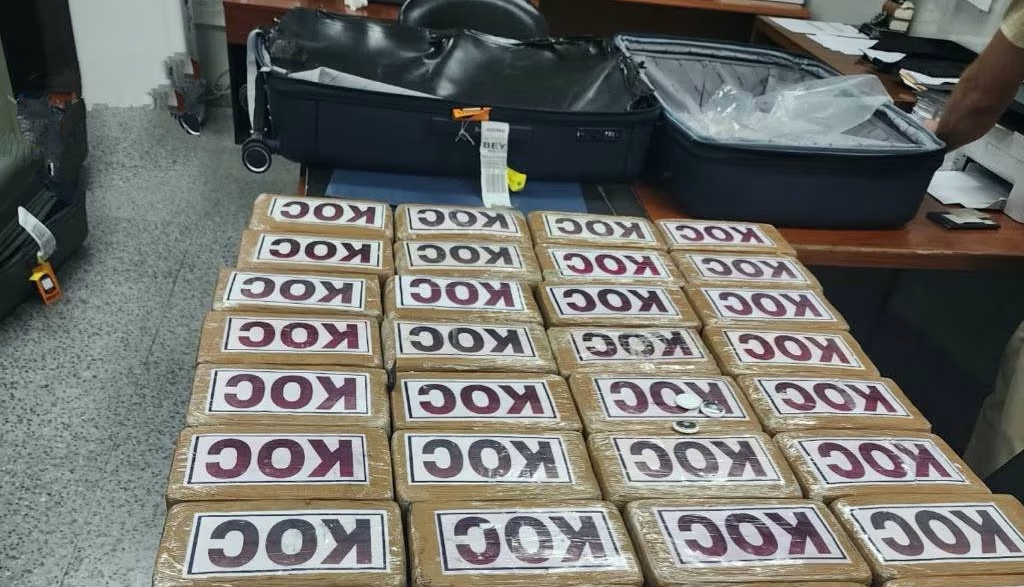
The two suitcases contained 40 packages of cocaine, each weighing approximately one kilogramme. The drugs were concealed in packaging designed to evade airport scanners, and the luggage was fitted with AirTag tracking devices.
Lebanese customs authorities recorded the total weight of the seizure, including packaging, at 46.7 kilogrammes, while General Security put the net cocaine weight at 40 kilogrammes.
Customs sources said the passenger was expected to hand over the shipment to an unidentified person outside the airport in exchange for the promised payment.
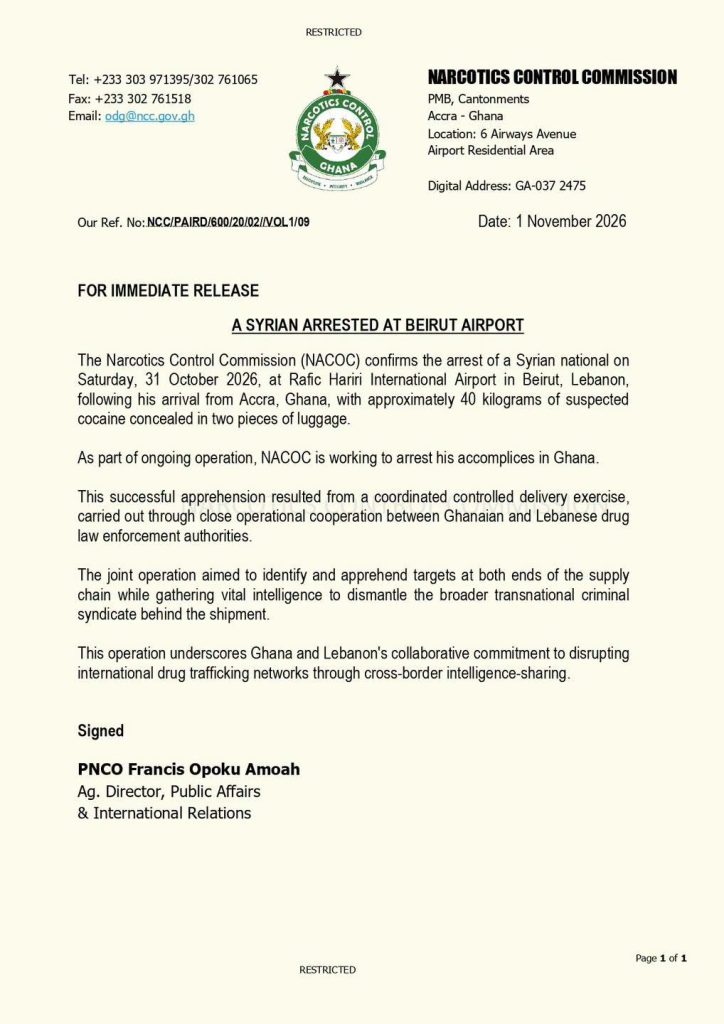
The Narcotics Control Commission (NACOC), however, has described the arrest as the outcome of a coordinated operation involving law enforcement authorities in Ghana and Lebanon.
In a statement issued on November 1, the commission said the seizure resulted from a controlled delivery exercise aimed at identifying suspects at both ends of the trafficking route.
“This successful apprehension resulted from a coordinated controlled delivery exercise, carried out through close operational cooperation between Ghanaian and Lebanese drug law enforcement authorities,” NACOC said.
The commission said the operation was intended to identify and apprehend targets across the supply chain while gathering intelligence to dismantle the wider trafficking network.
It added that investigations were ongoing to identify and arrest other suspects in Ghana.
NACOC’s statement did not address the allegation by Lebanese customs sources that the passenger had bribed officials at Accra airport.
According to LBCI, Brigadier General Misbah Khalil, head of Lebanon’s Higher Customs Council, contacted Ghanaian security and customs authorities following the seizure.
The two countries subsequently exchanged information to establish the shipment’s route, identify those involved and investigate the suspected trafficking network.
The Lebanese account said B.H. entered Lebanon legally through the Masnaa land border crossing on October 23 before travelling to Accra the same day. He returned to Beirut eight days later with the cocaine, according to the report.
The intended recipient of the drugs has not been identified.
The latest incident follows other major cocaine seizures involving shipments originating from Ghana.
In December 2025, Lebanese customs announced the seizure of approximately 70 kilogrammes of cocaine that had arrived from Ghana concealed in a 600-kilogramme air-freight shipment declared as coconut oil.
In September 2026, French authorities seized 3.9 tonnes of cocaine, valued at approximately 225 million euros, concealed in a shipment of plastic waste originating from Ghana at the port of Dunkirk.
In August, authorities at Tema Port also intercepted 866 parcels of suspected cocaine concealed in sacks of gari.
Investigations into the Beirut seizure are continuing under judicial supervision as authorities in Ghana and Lebanon seek to establish the identities of the alleged organisers, couriers and intended recipients.