The Minister for Gender, Children and Social Protection, Agnes Naa Momo Lartey, has raised concerns over the growing use of digital platforms, fraudulent job offers, and deceptive migration schemes to recruit victims into human trafficking networks.
She said evolving trends, particularly the exploitation of social media and online spaces, have become a major threat, especially among young people seeking employment opportunities and better livelihoods.
The Minister, who is also Chairperson of the Human Trafficking Management Board, noted that fraudulent job opportunities, online scams, and false migration promises continue to expose many Ghanaians to exploitation both within the country and abroad.
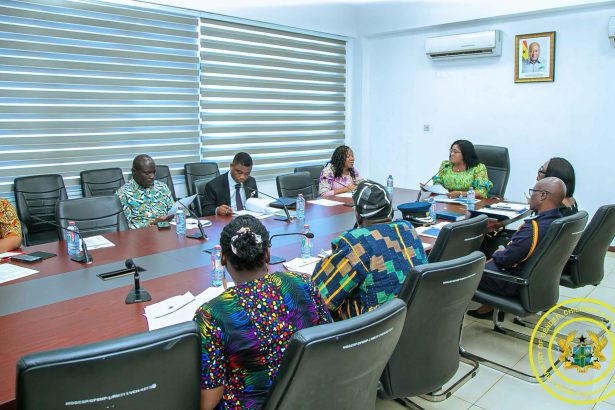
She made the remarks during the second quarter meeting of the Human Trafficking Management Board, where members called for stronger collaboration and strategic action to combat trafficking and protect vulnerable persons.
According to her, irregular migration, economic vulnerabilities, and seasonal labour activities often increase the risk of human trafficking, particularly during periods of heightened travel and labour migration.
While acknowledging progress made through victim rescues, increased prosecutions, and improved collaboration among relevant institutions, the Minister said challenges remain, including gaps in sustained coordination among stakeholders involved in the fight against trafficking.
The Human Trafficking Management Board is responsible for providing strategic direction and oversight for national interventions focused on prevention, protection, prosecution, and partnerships in addressing human trafficking.
A key feature of the meeting was the swearing-in of new board members, including the Chief Director of the Ministry of Gender, Children and Social Protection, Marian W. A. Kpakpah.
The newly inducted members took the Oath of Office and Secrecy, pledging their commitment to supporting the mandate and work of the Board.
Introducing the Chief Director to the Board, Agnes Naa Momo Lartey described her as a valuable addition whose experience would strengthen the Ministry’s efforts in advancing its programmes and interventions.
She commended members for their continued dedication and stressed that combating human trafficking remains a critical national responsibility requiring collective commitment.
The meeting also provided an opportunity for members to review activities of the Human Trafficking Secretariat, assess progress on ongoing interventions, and discuss strategies to strengthen the national response.
Members further received a presentation on the roadmap for the next National Plan of Action for the Elimination of Human Trafficking in Ghana.
The Minister emphasised the need for a data-driven and inclusive approach in developing the 2027–2030 plan, particularly in tackling emerging threats such as cyber-enabled trafficking and transnational criminal networks.
She also encouraged members to support innovative public awareness campaigns ahead of activities marking the World Day Against Human Trafficking in Persons, highlighting the need to reach young people through both traditional media and digital platforms.