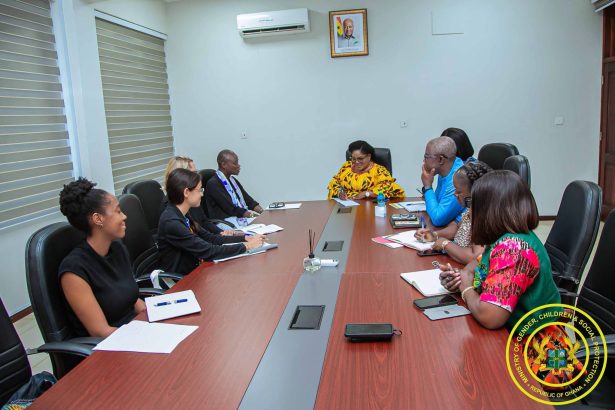
The French Embassy in Ghana and the Ministry of Gender, Children and Social Protection (MoGCSP) have begun discussions on possible areas of collaboration to advance women’s economic empowerment and gender equality.
The discussions took place when the French Ambassador to Ghana, Diarra Dime-Labille, led a delegation to pay a courtesy call on the Minister for Gender, Children and Social Protection, Dr Agnes Naa Momo Lartey.
The Ambassador said the visit was aimed at strengthening relations between Ghana and France while exploring areas where the two countries could collaborate in support of Ghana’s gender agenda.
She said gender equality remains an important component of France’s foreign policy and expressed interest in understanding the Ministry’s priorities and how existing and planned French-supported initiatives could align with them.
According to her, women’s entrepreneurship and agriculture presented significant opportunities for cooperation, particularly in promoting innovation, food security and economic opportunities for women.
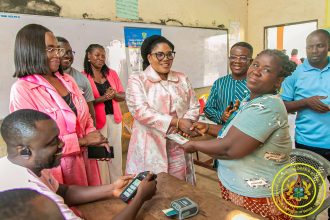
She also referred to ongoing initiatives supporting women entrepreneurs and expressed the hope that such programmes would continue to integrate gender considerations and contribute to sustainable development.
Responding, Dr Lartey said the issues raised by the French delegation were central to the Ministry’s mandate and stressed the need for gender considerations to be deliberately incorporated into programmes aimed at economic empowerment.
She observed that although gender was often treated as a cross-cutting issue across government institutions, this could sometimes result in gender concerns being overshadowed by broader sector priorities.
The Minister said women had historically played important roles in agriculture, much of it informally, and warned against their exclusion as the sector becomes increasingly formalised and technology-driven.
She said the Ministry was ready to work with the French Embassy to ensure that investments in programmes targeting women produced sustainable results.
Dr Lartey further urged the Embassy to involve the Ministry at the planning stage of programmes with gender dimensions rather than bringing it in after major decisions had been taken.
She cited the proposed 2027 Women Economic Empowerment Programme as one area where such collaboration could be explored from the outset.
The Minister also invited the French Embassy to share relevant gender action plans and programme documents with the Ministry to facilitate alignment with Ghana’s gender priorities.
She said the Ministry supports public institutions and local-level structures in developing and implementing gender plans and monitors progress through established reporting mechanisms.
Dr Lartey further identified Ghana’s National Gender Policy as a key framework for guiding interventions on gender equality and women’s empowerment.
She said aligning proposed initiatives with the country’s national gender priorities would strengthen local ownership, coordination and sustainability.
The meeting ended with both sides expressing interest in identifying practical areas of cooperation to expand opportunities for women and promote gender equality in Ghana.