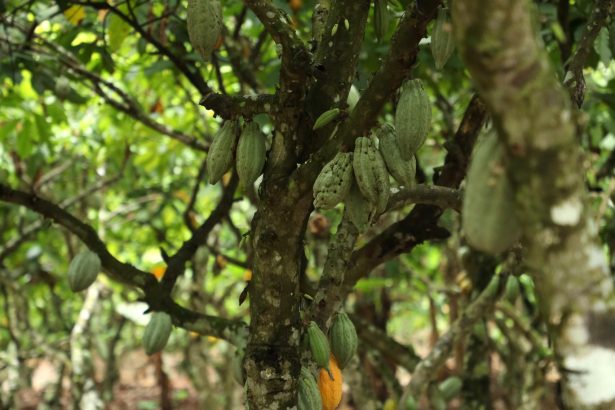
Ghana is transforming its agricultural sector by embracing climate-smart farming practices, in a move aimed at safeguarding one of its most vital exports — cocoa.
Cocoa plays a significant role in Ghana’s economy, contributing substantially to GDP and providing employment for millions of people, particularly in rural communities.
To strengthen the sector, the Ghana Cocoa Board (COCOBOD) has introduced the Ghana Cocoa Traceability System.
The initiative, supported by the European Union (EU), Germany’s Federal Ministry for Economic Cooperation and Development (BMZ), and the German development agency GIZ, aims to increase yields, improve farmer livelihoods and align with international standards on sustainable production.
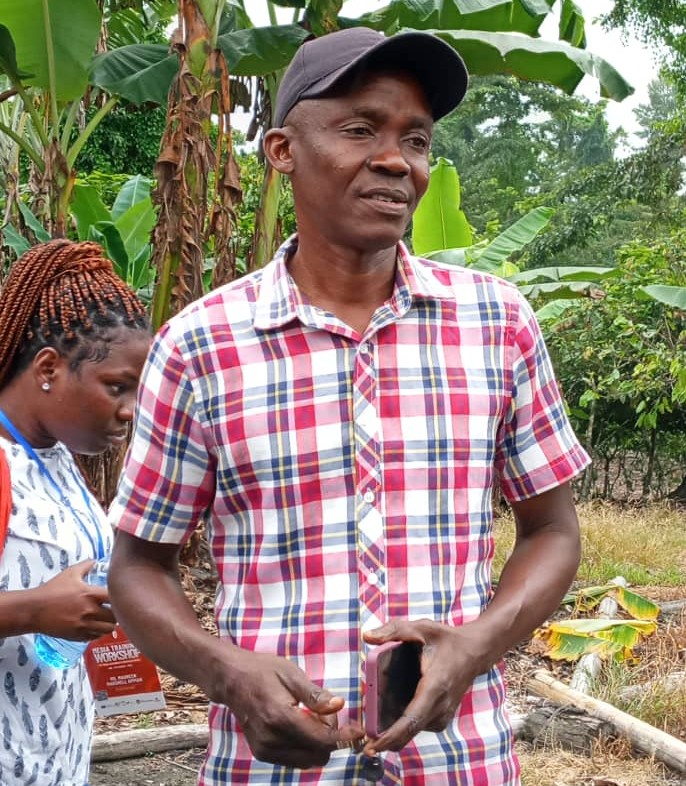
Samuel Torbi, a cocoa farmer in the Assin Fosu District in the Central Region, says he has adopted cultural practices such as planting shade trees to protect cocoa from heat and improve soil health, mulching and cover crops to retain moisture and prevent erosion, which were taught by extension officers from COCOBOD to keep his farm healthy and productive.
More Read
“We started cultural practices during February, which began with weeding, then followed up with massive pruning where we want good ventilation in the farm. When there is mistletoe on the cocoa, we use our labour to cut and bury it somewhere so it does not affect the crops,” he said.
Torbi, who owns three different cocoa farms, says the introduction of climate-smart farm practices and the cocoa traceability system has changed the way he works.
“Traceability helps a lot. We get more advantage from it. We were told not to use our children in cocoa farming, and we have access to good education and I’m able to get the correct acre of my land. I’m able to target the correct number of bags I’ll get from an acre because during the traceability, I’m able to tell that this farm is seventeen acres.
He added that, “So, if not for traceability I won’t do this calculation and I won’t be serious with cultural practices as we were told to do.”
For decades, traditional farming methods coupled with environmental challenges such as climate change, land degradation, and deforestation, have strained down the cocoa sector.
In response, Ghana is shifting towards a well-rounded approach that tackles low input use, poor record tracking, access to extension services, with the integration of the National Climate-Smart Agriculture and Food Security Action Plan and the Ghana Cocoa Traceability to empower farmers to adapt to climate risks while enhancing their livelihoods.
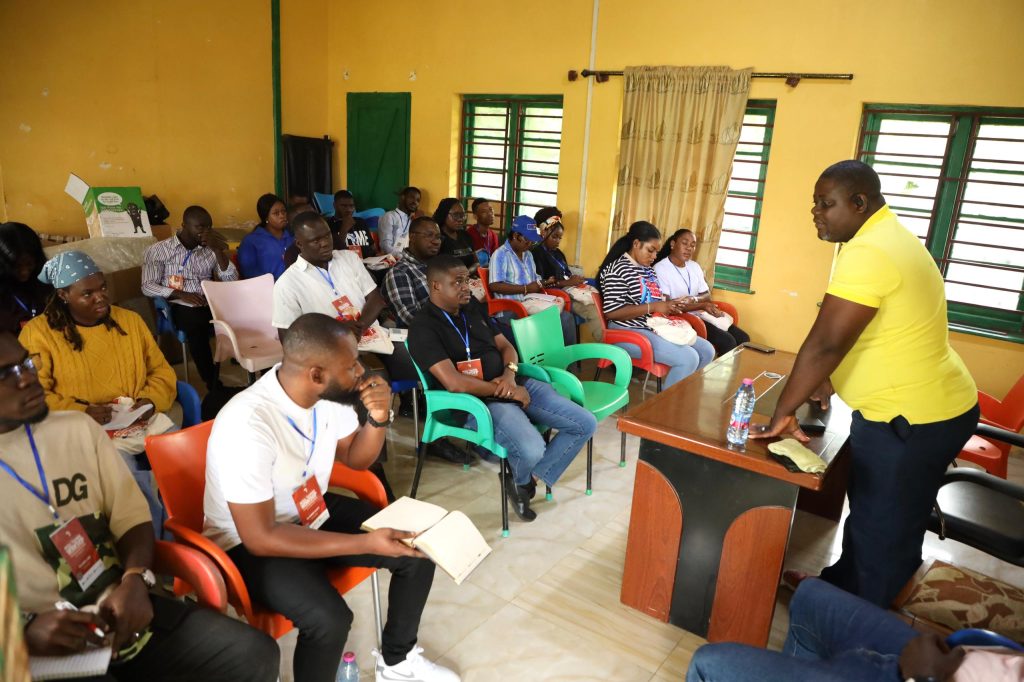
Ayiku Abdul Sallam Tetteh, Pruning and CMS Coordinator at the Cocoa Health and Extension Division (CHED), a division of COCOBOD in the Assin Fosu District, says cocoa farmers are already being trained to adopt climate-smart practices to sustain their farms in the face of changing weather patterns.
These practices include regular pruning to control pests and diseases, planting shade trees to protect cocoa from heat and improve soil health, using drought-tolerant and disease-resistant cocoa varieties, applying organic fertilisers like compost and manure, diversifying with other crops and livestock to reduce risk, avoiding deforestation and promote tree planting on farms, and farmer training programs on climate-smart farming.
Through regular field visits and practical sessions, CHED is helping farmers improve both yields and resilience.
“We educate farmers on cocoa plant health, pruning, pollination, and how to use climate-smart seedlings that can survive disease and harsh weather,” he said.
The implementation of the National Climate-Smart Agriculture and Food Security Action Plan (2016-2020), a collaborated effort between the Ministry of Food and Agriculture (MOFA), World Bank, and Consultative Group on International Agricultural Research (CGAIR), focuses on regenerative practices, resilient seed systems, agroecology, climate information services.
This is to create a productive agricultural environment, reduce climate change and lower greenhouse gas emissions.
Maame Efua Sarpong, another cocoa farmer said that “I’m really happy that COCOBOD and GIZ came up with this initiative to help we cocoa farmers know how to track our cocoa yields and also practice good farming practices. They also taught us that it is not good to cut down our trees or sell our lands to illegal miners to do galamsey which is not good for our environment.
“Before, I didn’t know these practices had an impact on our farm. But from the education CHED has been providing us on climate change and how to practice sustainable farming, I have become very conscious of the activities I do on my farm,” she added.
The Ghana Cocoa Traceability System (GCTS), a digital system introduced by COCOBOD, is designed to track every bag or ton of cocoa sold to Licensed Buying Companies (LBCs), from the farm all the way to the final consumer on the global market.

This helps ensure efficiency in the cocoa sector, compliance with the European Union deforestation regulations, and maintain Ghana’s position as a premium producer of quality cocoa.
Other components of the GCTS such as the Cocoa Purchase App is designed to help reduce the stress farmers go through in receiving payment from the LBCs. With this, farmers will either be paid through Mobile Money (Momo), bank transfers or other electronic payment platforms.
“God bless GIZ, COCOBOD and the government to make sure that we will be paid our monies through mobile money when we sell our cocoa beans to the LBCs, because sometimes these people cheat us or even delay our payment. So, I am very happy about this,” Maame Efua said.
Together, the National Climate-Smart Agriculture and Food Security Action Plan and the GCTS, not only ensures that Ghana’s cocoa sector meets EU standards on ethical sourcing, deforestation, and child labour, but also provides a broader framework for ethical agricultural practices.
This dual approach empowers farmers to grow more, earn more, and farm sustainably. It also enhances transparency in the sector while helping Ghana meet global standards.
Farmers are now equipped with knowledge of climate-smart practices; from weeding, pruning, and hand pollination to disease and pest control, regardless of the crop being cultivated, promoting higher yields and more sustainable farming.
As Ghana continues to embrace climate-smart practices and digital innovation in agriculture, farmers like Samuel Torbi and Maame Efua Sarpong are already seeing the benefits, better farm management, improved yields, and stronger market access. With the backing of international partners and a focus on sustainability, the country is not just growing cocoa but growing it smarter.