By: Abigail Teye
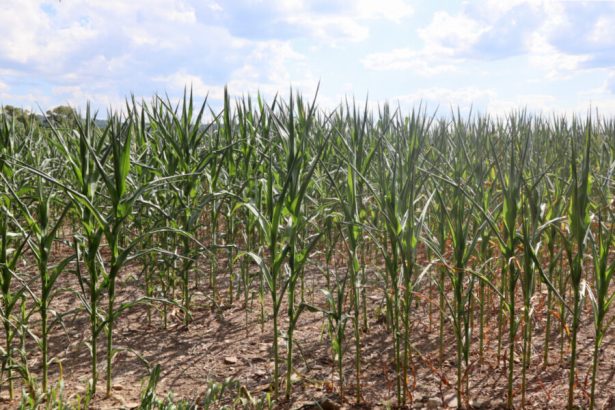
For 52-year-old Mama Ama in Ejura, farming is more than a job — it is her way of life. But today, she stands in her maize field, shaking her head as she looks at the stunted crops wilting under the scorching sun.
“The rains don’t come like before,” she says, her voice filled with worry. “Sometimes they come too much and destroy everything; sometimes they don’t come at all.”
This is not just Mama Ama’s story. It is the story of thousands of farmers across Ghana who find themselves at the mercy of a changing climate.
For decades, Ghana’s agriculture has been the backbone of the economy, providing livelihoods for over 50% of the population and contributing significantly to GDP. From cocoa in the south to tomatoes and onions in the north, these crops feed families and sustain rural economies. However, climate change is threatening this foundation.
In recent years, Ghana has experienced increasingly unpredictable rainfall patterns and prolonged droughts. The Northern Region, for instance, has seen erratic rains that arrive late and end early, leaving farmers scrambling to plant and harvest in narrow windows. In some cases, floods wash away entire fields; in others, heatwaves dry up yields before they can mature.
These changes have dire consequences. Crop failures mean food shortages, rising prices at the market, and declining incomes for farming families. Smallholder farmers, who often lack irrigation and rely heavily on rain-fed farming, are hit the hardest.
A mother may have to decide between buying medicine or enough food for her children, and young people are increasingly moving to urban centres in search of work.
Beyond local markets, Ghana’s position as one of the world’s top cocoa producers is also under threat. Cocoa, known as “the gold of Ghana,” depends on a delicate balance of rain and sun. But as weather becomes more extreme, diseases and pests spread more easily, and yields fall. This doesn’t just affect farmers — it jeopardises national revenue and foreign exchange earnings.
In the face of these challenges, many communities are trying to adapt. Some farmers are turning to drought-resistant seed varieties, while others are experimenting with agroforestry, planting trees alongside crops to provide shade and retain soil moisture. Organisations and government programmes, like Ghana’s Climate-Smart Agriculture and the Planting for Food and Jobs initiative, are working to provide training and support.
But the road ahead is not easy. Investing in irrigation, improving storage facilities, and expanding access to climate information services are critical steps. There is also a need for stronger policies that empower farmers, support women (who make up a large part of Ghana’s agricultural workforce), and encourage young people to see farming as a viable, innovative career.
Climate change may be a global issue, but its effects are deeply personal in Ghana. When a farmer loses a harvest, it isn’t just an economic statistic — it is a meal not served, a child not sent to school, a family pushed closer to poverty.
As Mama Ama puts it, “We can’t control the rain, but we can’t stop farming either. It is our life.”
Her words remind us that tackling climate change is not only about saving the environment. It is about protecting the food on our tables, the dignity of our farmers, and the future of Ghana’s next generation.