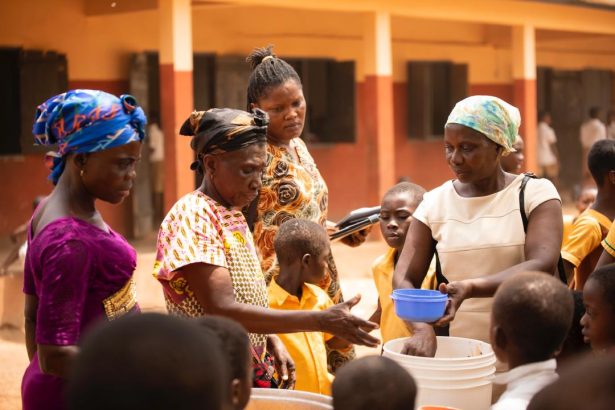
What if the food needed to improve children’s diets is already available – but not being used in school meals?
This question framed a recent webinar on school meals and food systems in Ghana, bringing together researchers, policymakers, and practitioners across nutrition, agriculture, and education. The event also marked the launch of the Ghana Community of Policy & Practice (CoPP), a new platform aimed at turning research and experience into more coordinated action on school feeding.
Opening the session, Professor Francis Bruno Zotor of the University of Health and Allied Sciences (UHAS) highlighted the broader significance of school meals: “School meals are about much more than feeding children – they are linked to nutrition, education, local agriculture, livelihoods, and the strength of our food systems.”

In Ghana, the national school feeding programme (GSFP) reaches around 4.5 million pupils, helping improve attendance and reduce short-term hunger. Yet challenges remain around the nutritional quality of meals, with high levels of malnutrition still affecting school-age children.
This creates a clear opportunity: to better connect school feeding with local food systems, ensuring nutritious, locally available foods are more consistently included in meals.

Putting local foods into practice
Across the webinar, speakers shared practical examples of how this is already happening.
Seth Offei from the GSFP Secretariat described efforts to introduce soy into school meals as an affordable, locally available source of protein. Caterers are being trained to prepare soy-based meals, while links are being strengthened between schools and local farmers producing soy.
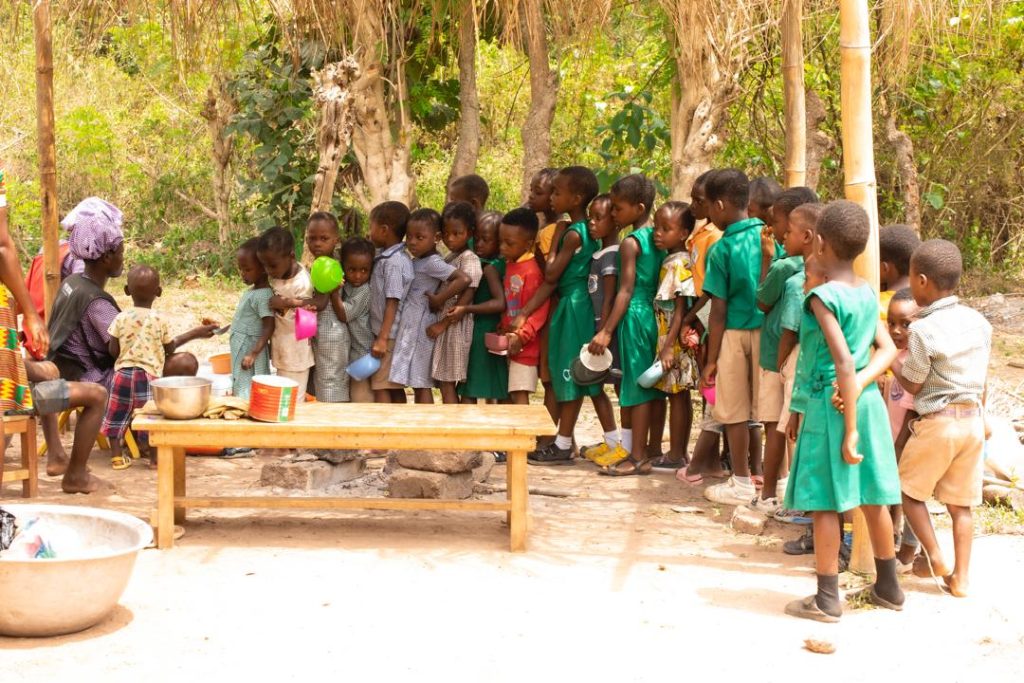
Similarly, research led by Jolene Mateko Nyako of the CSIR–Food Research Institute explored how aquatic foods could play a greater role in school diets. Although fish is widely produced in Ghana, it is not consistently included in school meals.
The research tested practical solutions, including fish-based products such as powders for soups and stews, and fish-based sausages, and worked directly with caterers and suppliers to improve how these foods are sourced and used. “When these foods are included, we see impact,” Nyako explained. “But it depends on how stakeholders are engaged and how systems work in practice.”
These examples highlight a common challenge: it is not just about what foods are available, but how easily they can be integrated into everyday school meals.
Making supply work on the ground
Ensuring these approaches succeed depends on how food is produced, supplied, and financed locally. Soy, for example, is currently grown in limited areas, and expanding production requires support for farmers and stronger links to school demand. Efforts are underway to encourage cultivation in suitable regions and connect farmers more directly with school feeding markets.
For aquatic foods, supply challenges are shaped by how the school feeding system operates. Caterers are often paid several months after delivering meals, creating cash flow constraints. In response, suppliers and processors are exploring more flexible payment arrangements that better match these timelines.
The role of behaviour and community
Supply is only part of the picture – what people choose to cook and eat also matters.
Joy Murasi of the Fortified Whole Grain Alliance highlighted how nutritious foods such as whole grains are often overlooked due to perceptions around taste and preparation. “It’s not about dishing out information – it’s about making these foods easy to understand, prepare, and enjoy.” Efforts are therefore focusing on practical engagement, including cooking demonstrations and working closely with schools and communities to build familiarity and trust.
Mawuli Kushitor of UHAS also emphasised the importance of community involvement, noting strong local willingness to support school feeding through contributions such as land, labour, or produce. However, this potential is not always fully realised when communities are excluded from planning and decision-making. Strengthening these connections can help ensure that local food is better integrated into school meals.
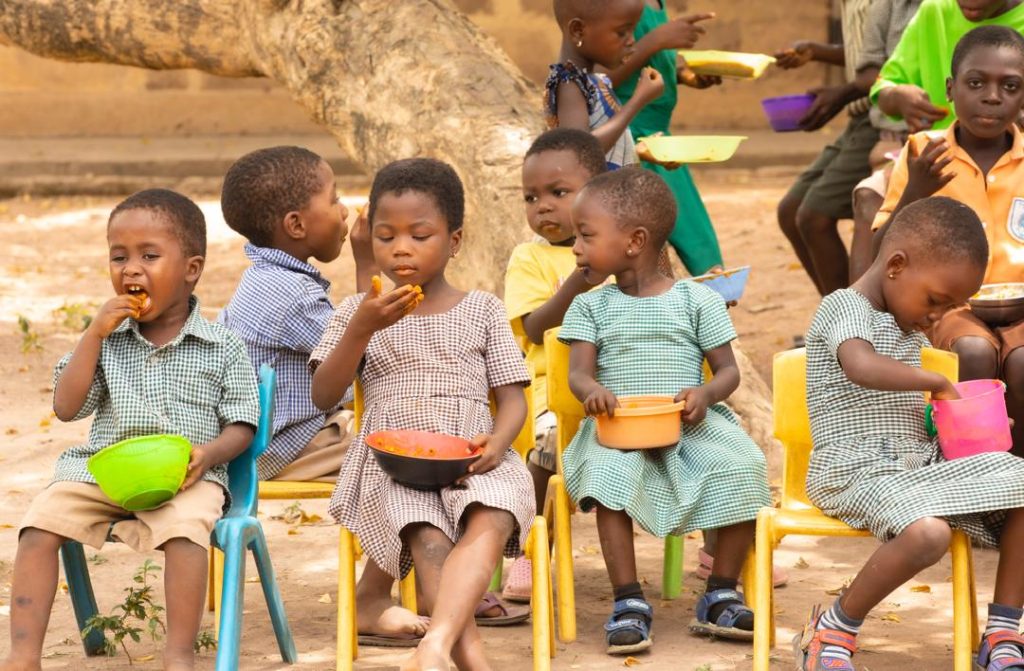
In some areas, community-led school farms are already demonstrating what this can look like. These initiatives are producing nutrient-rich crops such as orange-fleshed sweet potatoes, while also providing training in agriculture and food preparation.
A platform for coordinated action
The launch of the Ghana CoPP aims to bring these different areas of work together. By connecting stakeholders from government, research, development organisations, and communities, the platform provides a space to share learning and identify practical solutions.
As Professor Phyllis Addo of UHAS noted: “We all have a role to play in making sure school feeding works, and is done right.”
Participants were encouraged to stay engaged and share lessons from their work, helping to ensure that evidence continues to inform both policy and implementation.
Looking ahead
The discussions point to a broader shift: school meals are increasingly being seen not just as a social programme, but as a strategic entry point for strengthening food systems.
With locally available foods, active community engagement, and growing evidence of what works, there is a strong foundation to build on. The challenge now is to connect these elements more effectively – aligning production, supply, and behaviour to deliver more nutritious meals at scale.