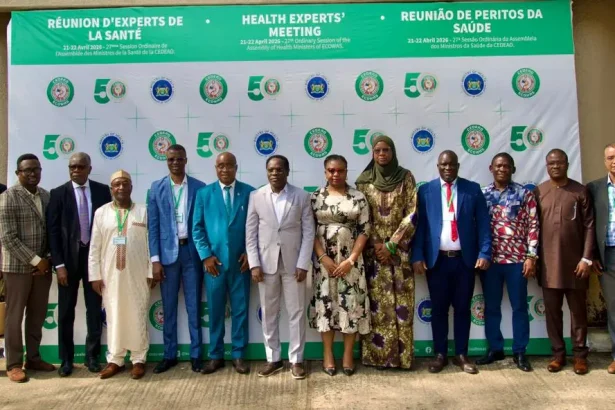
Health experts from ECOWAS member states have gathered in Freetown, Sierra Leone, for a two-day meeting aimed at strengthening regional cooperation on public health, with a strong focus on malaria elimination and health system resilience.
The meeting, held from 21 to 22 April 2026, forms part of the second statutory session of the 27th Ordinary Assembly of ECOWAS Health Ministers and is being organised by the West African Health Organisation (WAHO).
It brings together technical experts to review regional health performance, harmonise strategies and develop recommendations to guide ministerial decisions on priority health issues across West Africa.
Opening the session, Sierra Leone’s Deputy Minister of Health, Prof Charles Senesie, described malaria as a persistent threat to public health across the region, urging member states to intensify coordinated action.
He called for stronger collaboration among countries to build a unified response capable of addressing the disease and strengthening health systems.

Director General of WAHO, Dr Melchior Athanase J. C. Aïssi, said the theme of the meeting, “Advancing malaria elimination through an integrated regional strategy”, reflects both the urgency and complexity of the challenge.
He noted that despite ongoing efforts, malaria continues to place significant pressure on health systems, economies and vulnerable groups, particularly children and pregnant women.
Dr Aïssi stressed that elimination efforts cannot succeed through isolated national actions, but require coordinated regional strategies.
He highlighted the importance of harmonised approaches, cross-border surveillance, sustained investment and synchronised implementation of interventions across member states.
He also pointed to the need for strengthened epidemic preparedness and response systems, as well as improved coordination in tackling emerging health threats in the region.
Beyond malaria, discussions at the meeting will also address broader health challenges, including epidemic surveillance, HIV/AIDS response coordination and efforts to combat Lassa fever.
Experts are also expected to examine the implementation of the Regional Community Health Policy and review progress on regional health initiatives.
Another key focus of the meeting is the development and adoption of the Freetown Charter, which is expected to guide future cooperation on health priorities in the sub-region.
Participants are expected to share technical experiences and propose actionable recommendations to support decision-making at ministerial level.
WAHO has expressed hope that the meeting will produce practical commitments to accelerate progress towards malaria elimination and strengthen health systems across West Africa.