About 7,900 people died or went missing on migration routes in 2025, pushing the global total since 2014 beyond 80,000, according to the United Nations’ migration agency.
The International Organisation for Migration (IOM) says the figures reflect a continuing and worsening humanitarian crisis driven by unsafe migration pathways and limited access to legal routes.
The agency’s Missing Migrants Project reported that the deaths and disappearances highlight what it describes as a persistent global failure to prevent avoidable loss of life on migration routes.
It warned that many migrants are being forced into dangerous irregular journeys when safe and orderly pathways are unavailable.
According to the IOM, 2025 also saw unprecedented reductions in humanitarian funding and increased restrictions on information about migration routes, making it harder to track incidents.
More Read

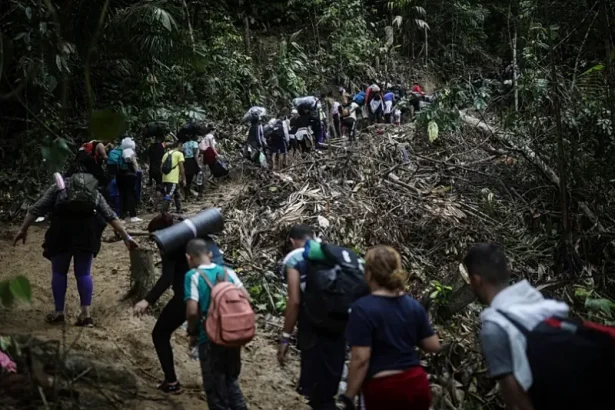
In the Americas, northbound migration along Central American routes declined significantly compared to 2024, following changes in United States migration policy and border enforcement measures.
Despite the drop in movement, the IOM noted that data gaps in the region—particularly from the United States and Mexico—limit a full understanding of the situation.
In Europe, arrivals also declined overall, although migration patterns shifted, with Bangladeshi nationals emerging as a leading group among new arrivals while Syrian migration decreased following policy and political changes.
The IOM recorded about 3,400 deaths and disappearances along sea routes to Europe in 2025, including 1,330 in the central Mediterranean and more than 1,200 along the Atlantic route towards Spain’s Canary Islands.
The agency also reported nearly 900 deaths in the Bay of Bengal and Andaman Sea, a route mainly used by Rohingya refugees, describing it as the deadliest year on record for that corridor.
IOM officials say migration routes continue to shift in response to conflict, climate pressures and policy changes, but the risks remain severe.
The organisation estimates that at least 340,000 families have been affected by missing migrant cases since 2014, facing emotional, legal and economic hardship due to unresolved disappearances.
It is calling for stronger political commitment globally to reduce deaths, improve data collection and expand safe migration pathways.
The IOM says better information and coordinated international action are critical to addressing what it describes as a growing and preventable humanitarian crisis.