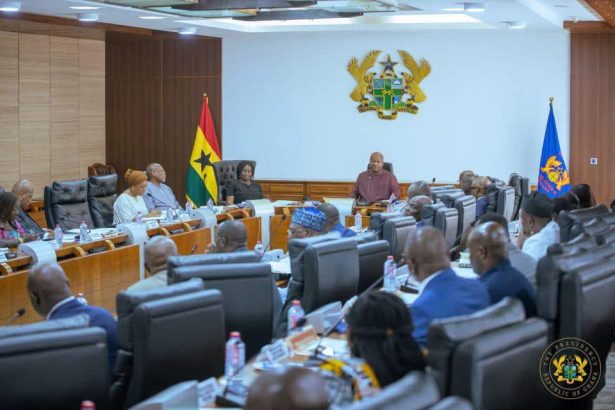
President John Dramani Mahama has directed key ministers to implement urgent measures to cushion Ghanaians from the impact of rising fuel prices, following global supply disruptions linked to escalating tensions involving Iran, Israel and the United States.
The directive was issued after an emergency Cabinet meeting held on Thursday, April 9, shortly after the President returned from an official visit to France. The government says the interventions will take effect for an initial period of four weeks, subject to review.
The recent surge in fuel prices has been largely attributed to disruptions in global oil supply chains, particularly the reported closure of the Strait of Hormuz, a vital corridor for international petroleum shipments.
As part of the response, the President has tasked the Minister for Finance, Cassiel Ato Forson, and the Minister for Energy, John Abdulai Jinapor, to engage industry stakeholders on the possible removal of selected taxes and levies on petroleum products.
The proposed tax adjustments are expected to take effect from the next pricing window, in a bid to lower pump prices and provide immediate relief to consumers.

In a related move, the Minister for Transport has been instructed to fast-track the deployment of 100 buses under the Metro Mass Transit system along major routes. The buses are to operate at reduced fares compared with private transport operators, offering more affordable travel options to commuters.
President Mahama has also reiterated the government’s ban on fuel allowances for ministers and senior officials, describing it as a necessary measure to curb public expenditure during the period of economic strain.
A statement shared on the Presidency’s official social media platforms confirmed that the Cabinet had directed the immediate removal of certain taxes and margins on fuel, with implementation expected within the next pricing cycle.
The Presidency further indicated that the deployment of the Metro Mass Transit buses would be prioritised along high-traffic corridors to maximise impact, while ensuring that fares remain accessible to the public.
The measures form part of a broader government strategy aimed at mitigating the effects of rising global fuel prices on households and businesses, as authorities seek to stabilise the domestic energy market amid ongoing international uncertainties.