By Herald Reporter
The World Bank has approved a $300 million financing package to support Ghana’s ongoing education reforms aimed at phasing out the double-track system in Senior High Schools, in what government describes as a major boost to the Free SHS implementation agenda.
The funding will be channelled into the Transformative Secondary Education for Access, Results, and Relevance for Jobs (STARR-J) project, a nationwide intervention designed to expand access to secondary education, improve teaching and learning outcomes, and address critical infrastructure deficits in second-cycle institutions.
The initiative is also expected to ease long-standing pressures on school infrastructure, which have contributed to the adoption of the double-track system following the expansion of enrolment under the Free Senior High School policy.
A central goal of the project is to support government’s target of fully abolishing the double-track system by 2027, restoring a more stable and continuous academic calendar across Senior High Schools.
More Read
According to the Ministry of Education, the programme will prioritise the construction and expansion of classroom blocks, dormitories, laboratories, and other key facilities, while also improving efficiency in school management and delivery of instruction.
Officials say the intervention is intended not only to solve infrastructure challenges but also to reposition secondary education as a stronger foundation for skills development and employment readiness.
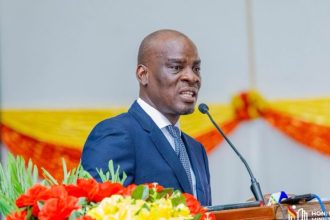
Speaking on the development, Education Minister Haruna Iddrisu described the approval as a strategic investment in Ghana’s future workforce, particularly its youthful population.
He said the STARR-J project would help bridge the gap between classroom learning and labour market demands while improving overall school conditions.
“This project is a major investment in Ghana’s growing youthful population and a strategic contribution to the country’s long-term human capital development and global competitiveness,” Mr Iddrisu said.
He added that the intervention would expand learning opportunities while responding directly to infrastructure deficits created by the rapid expansion of Free SHS enrolment.
“It will help expand learning opportunities, improve school conditions, better align secondary education with the skills demanded by the labour market, and, more importantly, respond to the infrastructure deficit associated with expanded access to Free Secondary Education,” he noted.
The Ministry of Education has expressed appreciation to the World Bank, particularly Country Director Robert Taliercio O’Brien and the education team, as well as the Ministry of Finance led by Dr Cassiel Ato Forson, for their role in securing the financing package.
The STARR-J project reinforces government’s broader commitment to equitable access to quality secondary education while improving outcomes for students across the country.