
The government has rolled out 8,500 laptops to training centres under the One Million Coders Programme in a major push to expand digital skills training and improve access to technology-driven education across the country.
The disclosure was made by Fred Yeboah, Director of Research and Innovation at GI-KACE and member of the programme’s implementation committee, during an interview on the Joy Super Morning Show.
According to him, the laptops are intended to support training centres facilitating the initiative, particularly for participants who may not own personal computers or have stable internet access.
“We have already distributed 8,500 laptops,” he revealed.
Mr Yeboah clarified that the devices are not being given directly to beneficiaries enrolled in the programme but have instead been allocated to accredited centres hosting the training sessions.
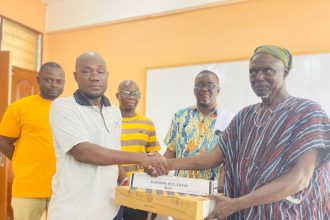
“These laptops are meant for the centres that are used for the training,” he explained.
He disclosed that all 158 centres currently participating in the initiative have already received the equipment, with internet connectivity also being provided to enhance online learning and virtual instruction.
The One Million Coders Programme, one of government’s flagship digital transformation initiatives, is aimed at equipping thousands of young Ghanaians with practical technology and coding skills to improve employability and prepare them for opportunities within the digital economy.
Officials believe the programme could play a critical role in tackling rising youth unemployment while positioning Ghana as a competitive player in the growing global tech space.
Mr Yeboah noted that the programme has adopted flexible learning approaches to accommodate participants from different backgrounds, locations and educational levels.
According to him, while some trainees are able to undertake self-paced online courses using mobile phones, tablets or personal laptops, others are required to report to designated training centres for structured virtual or face-to-face instruction.
“For all the 158 centres that I’ve mentioned, all of them have been provided with laptops,” he stressed.
He further disclosed that 16 specialised centres — one in each region — have been selected to pilot fully physical classroom sessions with dedicated instructors assigned to support participants directly.
The latest intervention comes amid increasing public pressure on government to bridge the digital divide and create more accessible technology training opportunities for young people seeking careers in the ICT sector.