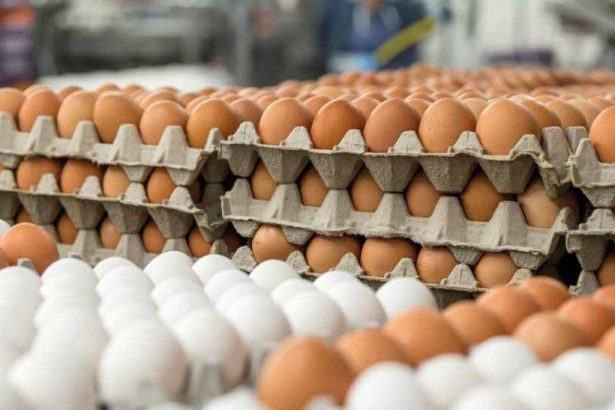
The government is considering plans to convert excess eggs into powdered products and other processed alternatives as part of a new strategy to address persistent oversupply challenges confronting Ghana’s poultry industry.
The intervention forms part of discussions surrounding a proposed national poultry master plan aimed at reducing losses among poultry farmers, stabilising market prices and expanding value-added opportunities within the sector.
Speaking after a stakeholder engagement on the proposed policy framework, Kwesi Etu-Bonde, Chief Technical Advisor to the Minister of Food and Agriculture, said authorities are increasingly focusing on processing, preservation and storage solutions to deal with recurring egg gluts.
“Eggs can be processed into powder, and that is part of the value addition we want the poultry master plan to address,” he stated.
For years, poultry farmers across the country have battled periodic oversupply of eggs, a situation industry players say often forces producers to slash prices drastically in order to avoid spoilage and financial collapse.

According to Mr Etu-Bonde, recent government interventions in maize and soya bean production have significantly reduced the cost of poultry feed, encouraging more farmers and investors to venture into poultry production.
“The egg glut has come to our attention. Last year, the ministry supported the production of grains such as maize and soya, and that has brought feed prices down. As a result, more people have been incentivised to go into poultry production,” he explained.
The increased production, while positive for food supply, has also triggered concerns over market saturation and inadequate storage and processing infrastructure.
Government says it is therefore exploring alternative consumption and distribution channels to absorb excess supply and protect poultry farmers from severe losses.
Mr Etu-Bonde disclosed that the School Feeding Programme has already been identified as one of the immediate avenues for supporting local egg consumption.
“The President has instructed that the School Feeding Programme should purchase eggs from the market as part of the effort to support poultry farmers,” he noted.
The proposed poultry master plan is expected to introduce long-term measures to strengthen the poultry value chain, improve processing capacity, promote value addition and reduce the impact of recurring production gluts in the industry.
Industry stakeholders have repeatedly called for stronger policy support, arguing that without strategic investment in storage, processing and local consumption, many poultry businesses could struggle to survive periods of excess production.