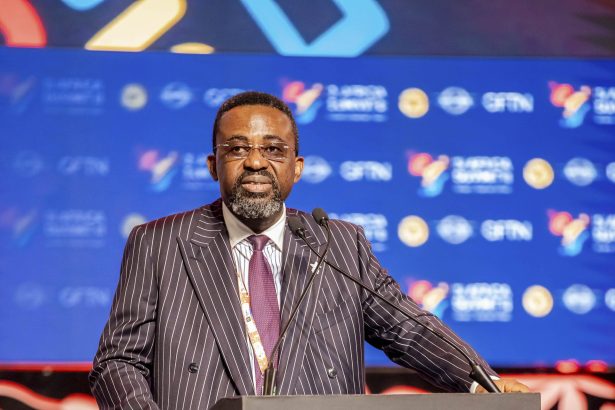
Governor of the Bank of Ghana, Johnson Pandit Asiama, has warned that Africa risks celebrating impressive digital finance statistics without achieving meaningful economic transformation if fragmented systems and weak regulation persist across the continent.
Addressing participants at the 3i Africa Summit 2026 in Accra, the BoG governor said Africa’s fintech revolution must now shift from merely expanding access to delivering measurable economic value for businesses and ordinary citizens.
According to him, the continent has made significant progress in mobile money and digital financial inclusion over the past decade, but the bigger challenge now lies in ensuring that digital systems actually support trade, enterprise growth and economic resilience.
“Access has expanded, the task now is to make it count,” Dr Asiama stated.
His remarks come at a time African governments are aggressively promoting fintech and digital payment systems as tools for economic growth, despite growing concerns over disconnected payment platforms, regulatory inconsistencies and dependence on foreign financial infrastructure.

Dr Asiama said digital finance is no longer a secondary aspect of economic development but increasingly determines competitiveness in global markets.
“Digital finance is shaping how value is created, trust is built, and markets are connected,” he said.
The governor disclosed that almost half of adults in Sub-Saharan Africa now hold digital financial accounts, describing the development as evidence that Africa has already built substantial momentum within the fintech space.
“Africa is not starting from zero. We are starting from momentum,” he stressed.
He, however, warned that the continent’s progress could stall if African countries fail to connect their systems and harmonise regulations governing digital finance operations.
“The challenge is no longer building systems, it is connecting them,” he noted.
The governor further revealed that the Bank of Ghana is advancing new regulatory frameworks on virtual assets, digital lending, open banking and cross-border fintech operations as part of efforts to modernise Ghana’s financial ecosystem.
He also underscored the need for stronger digital identity systems and coordinated regulations to strengthen trust and improve efficiency within Africa’s financial markets.
Dr Asiama urged African governments to support local fintech firms capable of competing globally instead of relying heavily on external financial technologies and payment systems.
“The value of this Summit will not be measured by the conversations we have, but by the outcomes we drive,” he added.
He challenged policymakers and financial institutions to take leadership in shaping the future of global digital finance rather than remaining passive participants in systems controlled elsewhere.