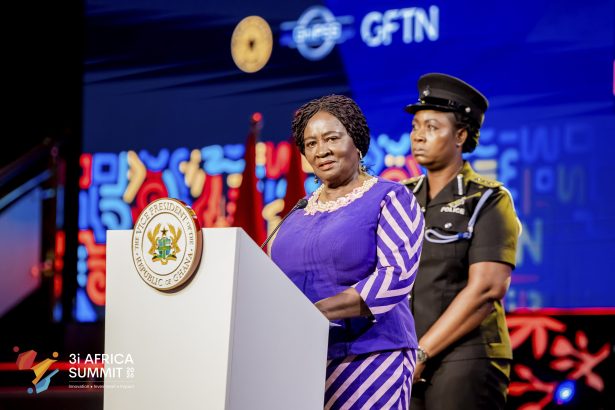
Ghana is preparing to spearhead a major continental digital trade experiment alongside Rwanda and Zambia as African leaders push to break dependence on foreign-controlled financial systems that continue to slow trade within the continent.
The initiative, announced at the 3i Africa Summit 2026 in Accra, will see participating countries pilot a digital trade corridor designed to make cross-border payments, identity verification and business transactions faster and cheaper across Africa.
Vice President Jane Naana Opoku-Agyemang disclosed that the pilot programme will test mobile money interoperability, shared digital identity systems for Know-Your-Customer (KYC) verification and harmonised electronic invoicing mechanisms among participating countries.
She said the project is expected to expose whether Africa’s much-talked-about integration agenda can function in reality rather than remain political rhetoric.
“This pilot will be implemented, tested, and measured to ensure that integration works in practice,” she stated.
More Read

Her remarks highlighted growing concern among African policymakers over the continent’s continued reliance on external financial networks for intra-African transactions — a situation critics say drains resources and weakens economic independence.
According to the Vice President, Africa’s future competitiveness will largely depend on how quickly governments embrace digital integration and modernise systems governing trade, payments and identity verification.
“Economic sovereignty now depends on integration, particularly digital integration,” she stressed.
She identified payment systems, digital identity, regulation and infrastructure as the four pillars critical to Africa’s digital transformation drive.
The Vice President also warned that fragmented regulations and poor infrastructure remain major obstacles to continental trade expansion.
“Intra-African payments routed outside the continent increase cost and delay, undermining the vision of a single market,” she noted.
She further raised concerns about Africa’s weak control over its own data infrastructure, warning that dependence on foreign data storage systems poses risks to the continent’s digital sovereignty.
“If our data is stored and processed elsewhere, then even when we participate, we lack control,” she cautioned.
The digital trade corridor is expected to support implementation of the African Continental Free Trade Area by reducing transaction bottlenecks and easing digital trade across borders.
The Vice President urged African governments, regulators and fintech firms to shift attention from conferences and declarations to practical implementation.
“Integration must not only be discussed, it must be demonstrated,” she added.
The summit brought together central bankers, fintech executives, policymakers and investors to discuss the future of digital finance and economic integration across Africa.