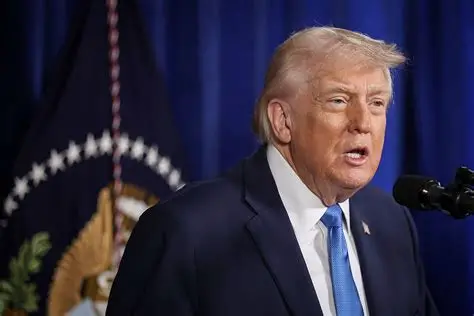
United States President Donald Trump has cast doubt on prospects for a breakthrough with Iran, saying Tehran has “not yet paid a big enough price” despite submitting a new peace proposal aimed at ending escalating tensions in the Middle East.
The comments come after reports that Iran has sent a 14-point peace plan to Pakistani officials involved in mediation efforts, according to Iran’s semi-official Fars news agency. A senior Iranian official has also indicated that “the ball is in the United States’ court,” signalling Tehran’s readiness to engage in further negotiations.
Speaking to reporters aboard Air Force One on Saturday, President Trump said he had not yet reviewed the “exact wording” of the proposal.
In a subsequent post on social media, he acknowledged that the plan would be considered but questioned whether it could be accepted in its current form. He argued that Iran had “not yet paid a big enough price for what they have done to Humanity, and the World, over the last 47 years,” referencing the period since the 1979 Islamic Revolution, which brought Iran’s current clerical leadership to power.
Despite extending a ceasefire arrangement with Iran last month, Trump has maintained that military options remain on the table should diplomacy fail.
Earlier in the week, he also rejected proposals linked to Iran that suggested reopening the Strait of Hormuz before substantive negotiations on the country’s nuclear programme. The strategic waterway, a critical global energy route, has been severely disrupted in recent months.
Iran has consistently maintained that its nuclear programme is peaceful and intended for civilian energy production. However, international concerns persist over its uranium enrichment levels and stockpiles, with reports indicating the country retains significant quantities of highly enriched material.
Tensions have also intensified around maritime security in the Gulf. Iranian authorities have maintained pressure in the Strait of Hormuz area, with shipping incidents reported in nearby waters. The United Kingdom Maritime Trade Operations Centre has recorded dozens of maritime disruptions since late February, raising concerns over global energy supply stability.
The Strait of Hormuz, through which roughly a fifth of global oil and gas shipments pass, remains a key flashpoint. Any disruption has immediate implications for global energy prices and supply chains.
Meanwhile, reports suggest Washington is considering further economic pressure measures targeting Iranian ports and shipping routes, alongside continued sanctions enforcement. Iran, in turn, has briefly signalled openness to easing restrictions in the strait before reversing its position.
Analysts say the situation remains highly fluid, with both sides still divided over core issues including nuclear restrictions, sanctions relief, and maritime access.
For now, diplomatic engagement continues through intermediaries, but the path to any comprehensive agreement remains uncertain as pressure mounts on both Washington and Tehran.