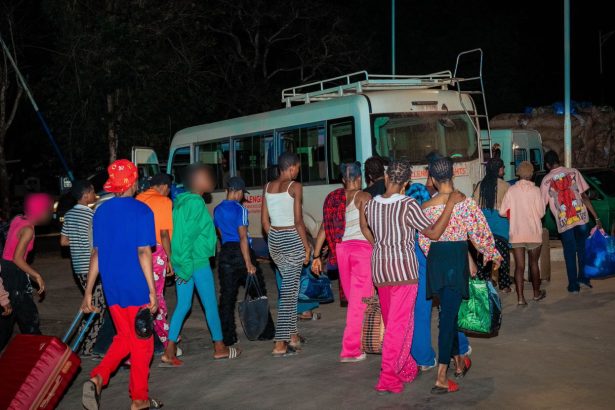
The Ghana Police Service’s Anti-Human Trafficking Unit has rescued 42 individuals who were coerced into commercial sex work, including a pregnant 14-year-old girl who was still forced to engage in sex work despite her condition.
The operation, conducted in collaboration with Challenging Heights, an anti-human trafficking NGO, uncovered a troubling pattern of teenagers lured into Ghana from Nigeria and sexually exploited in mining communities in the Western North Region.
The rescued victims, aged between 13 and 17, were reportedly forced to sleep with between 10 and 20 men daily to meet earnings targets of GHS 1,000 to GHS 1,500. Failure to meet these targets often resulted in starvation and physical abuse, according to investigators.
James Kofi Annan, Chief Executive Officer of Challenging Heights, said the victims were recruited from low-income households in Nigeria’s Enugu, Imo, and Akwa Ibom states with false promises of decent jobs and stable income.
Following the rescue, 36 of the victims have been admitted to the Challenging Heights Anti-Human Trafficking Rehabilitation Centre, while the remaining six are in police custody.
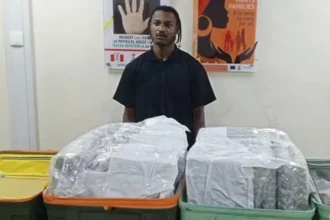
In 2025 alone, Challenging Heights, in collaboration with state security agencies, has rescued 201 victims of human trafficking, bringing the total number of victims rescued through the organisation’s operations to 2,930.
Annan noted that most of the rescued victims are Nigerian nationals. He called on the Ghanaian government to provide adequate funding to state security agencies to tackle human trafficking, while also urging Nigerian authorities to take action.
“I will like to call on the Nigerian government to look at addressing this issue of its citizens being trafficked into Ghana. It is becoming a worrying trend where every year, hundreds of Nigerians are trafficked into Ghana and many of them forced into prosecution and cyber crime,” he said.
Annan also emphasised that illegal mining, or galamsey, creates an enabling environment for commercial sex activities and other vices, adding that a successful fight against illegal mining would partially address human trafficking.