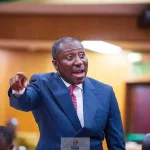
The Chief Executive Officer of the Ghana Gold Board (GoldBod), Sammy Gyamfi, has defended the full centralisation of Ghana’s gold trading sector, arguing that the policy has brought order and plugged major revenue leakages.
Speaking on the rationale behind the move, he disclosed that Parliament has granted GoldBod exclusive authority over the purchase and sale of gold within the sector, effectively shutting out all independent operators.
Under the new arrangement, no individual, private company or state institution can legally engage in gold trading outside the GoldBod structure.
Gyamfi explained that before the reform, the sector was scattered across multiple institutions, including the Bank of Ghana and the Minerals Income Investment Fund, as well as private aggregators, all operating without proper coordination.
According to him, this fragmented system created significant regulatory gaps, making it difficult for the state to monitor activities and fully benefit from the country’s gold resources.

“It was a very uncoordinated, fragmented sector. And because of that, there were a lot of leakages. We were not able to centralize, coordinate and regulate the trade in the way that we as a country will be able to maximize benefits from it,” he said.
He noted that the new legal framework consolidates all powers related to gold trading under GoldBod, including the repeal of licensing authority previously exercised by the sector minister.
Gyamfi further clarified that even institutions such as the Bank of Ghana can now only participate in gold trading through the GoldBod.
The CEO stressed that the system establishes a single, streamlined structure responsible for buying, selling, assaying and exporting gold.
According to him, the reforms have already strengthened oversight, minimised losses and positioned Ghana to derive maximum value from its gold exports.