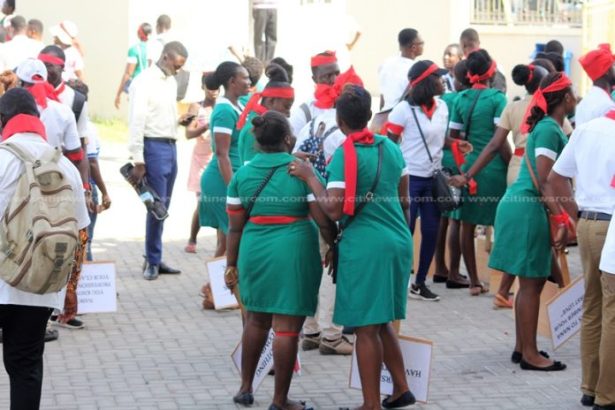
The Coalition of Unpaid Nurses and Midwives Ghana has accused authorities of erasing long-standing salary arrears from the government payroll system without payment, describing the development as shocking, unjust and deeply troubling.
In a press statement dated 26 February 2026 and issued from Sunyani in the Bono Region, the Coalition alleged that accumulated arrears owed to a number of its members have “suddenly and completely disappeared” from their payment vouchers following the most recent payroll validation for February 2026.
According to the group, affected nurses and midwives had consistently seen their arrears validated on the government payroll system month after month, despite not receiving actual payments. However, during the latest validation exercise, the arrears were allegedly cleared from their records without any corresponding payments made.
The Coalition claims that its Payroll Validators and Human Resource Officers across various health facilities have independently confirmed that the arrears were removed from the payment vouchers of affected staff.
“When this alarming issue was brought to the attention of the public, the Controller and Accountant-General’s Department moved swiftly to deny our claims. This denial is shocking and unacceptable,” the statement said.
The group is demanding answers as to who authorised the removal of what it describes as legitimately earned arrears and on what legal or administrative basis such action was taken.
Describing the situation as not only unjust but dishonest, the Coalition said the development reinforces its long-held concerns about transparency in the handling of salaries within the public health sector.
It called on the Government of Ghana to urgently investigate the matter, restore the allegedly removed arrears and ensure prompt payment to affected nurses and midwives.
The statement was jointly signed by Stephen Kwadwo Takyi, Convener of the Coalition, and Jane Ofori Atta, Secretary of the Coalition.
The allegations come amid heightened tensions over delayed salary payments within sections of the public sector, a situation that continues to generate concern among frontline health workers.