…. October 15 targeted for adjustment & payment
The Controller and Accountant-General’s Department (CAGD) has received promotion input forms for 52,000 teachers, paving the way for the verification of their records ahead of the payment of salary adjustments and promotion arrears.
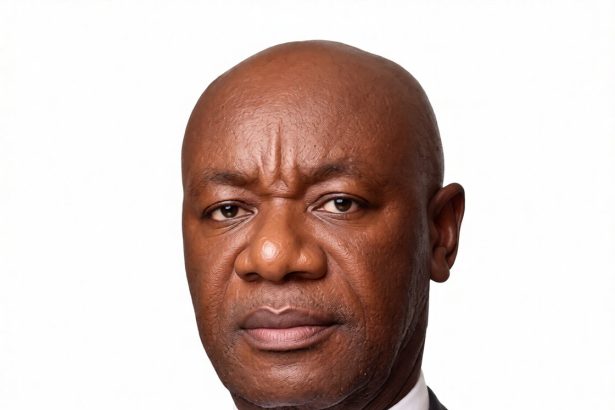
The Controller and Accountant-General, Kwasi Agyei, said the Ghana Education Service (GES) had completed the submission of the required input forms after processing the promotions on the Government payroll system.
According to him, as of 2 p.m. yesterday, Thursday, October 8, the Department had processed the promotions of all 52,000 teachers and received the accompanying input forms needed to complete the exercise.
The input forms, together with the teachers’ promotion letters, are now being reviewed by CAGD officials to determine which records have been successfully verified and validated for payment.

Mr Agyei said the validation exercise was expected to be completed by next week, after which payments would be processed for teachers whose records had been cleared.
“So as we speak now, I just called, and I understand they have submitted all the input forms for the 52,000. So, the input forms and the promotion letters, my team is working on them. We are verifying them, and whatever is verified and validated, as the Deputy Minister said, the intention is to pay on the 15th or before the 16th of October,” he said in an interview on Eyewitness News yesterday.
He further disclosed that promotions not captured in the current payroll process would be processed through a supplementary payroll and subsequently reflected in the teachers’ salaries.
The development follows a directive issued by the Minister of Education, Haruna Iddrisu, on September 28 for the Director-General of the GES to submit data on all promoted teachers to the CAGD.
The directive was intended to facilitate the payment of salaries and arrears owed to teachers whose promotions had been delayed.
The delays were among the concerns raised by the National Association of Graduate Teachers (NAGRAT), the Ghana National Association of Teachers (GNAT) and the Pre-Tertiary Teachers’ Association of Ghana (PRETAG), which embarked on industrial action over outstanding issues relating to promotions, conditions of service and deprived-area allowances.
The latest development comes amid a wider dispute over the CAGD’s requirement for documentary evidence to verify teachers’ promotions and upgrades before salary adjustments and arrears are paid.
The Herald’s investigation into the dispute has established that the CAGD’s insistence on documentary evidence for promotions and upgrades is at the centre of the disagreement between the Department, the GES and the teacher unions.
Sources familiar with the payroll system said the verification requirement was intended to prevent cases in which teachers were promoted beyond their actual grades or ranks, resulting in the payment of salaries and arrears to which they might not be entitled.
According to the sources, weaknesses in the pre-COVID-19 payroll process were exploited by some individuals within the GES, allegedly in collaboration with some teachers, under mass promotion arrangements.
The practice allegedly involved teachers being assigned ranks higher than their actual grades, resulting in higher salaries and promotion arrears.
In some instances, the sources alleged that the additional payments were shared between individuals on the GES side, particularly those in its Human Resources Department, and teachers involved in the alleged arrangements.
A second category of alleged abuse involved teachers being assigned higher ranks to inflate the salary arrears owed to them, particularly the nine months’ arrears arising from the current promotion exercise.
In an effort to prevent such abuses and protect the integrity of the Government payroll, the CAGD, in a letter to the GES dated December 23, 2025, directed that teachers due for promotion submit specific documents for verification.
The documents included a completed Promotion/Change of Grade Input Form, a certified copy of the promotion letter and a copy of the employee’s current payslip.
The requirement was intended to ensure that only legitimate promotions were captured on the Government payroll and that unearned salaries were not paid.
The letter stated that the documents were “mandatory for all promotions”.
It was signed on behalf of the Controller and Accountant-General by Dr Edward A-Boateng, Deputy Controller and Accountant-General (FMS).
The letter further stated that the CAGD required all Human Resource Officers of the GES to submit formal inputs, particularly promotion documents captured after the data-entry window, for validation before salary processing.
According to the Department, the directive was followed by the continued submission of Excel data rather than the actual input documents.
It explained that the use of Excel data had been introduced as a temporary measure during the COVID-19 pandemic to ensure business continuity.
However, while other covered entities, including the Ghana Health Service and the Local Government Service, had subsequently returned to the standard procedure under their mass promotion schemes, the GES had continued to rely on the Excel-based, COVID-19-era arrangement.
“Going forward, CAGD will no longer accept promotional input submitted with Excel data instead of the input documents. This practice lacks the necessary source documentation for substantiation and is susceptible to abuse,” the letter stated.
The Department added: “We expect full compliance with these standard operating procedures to ensure that only eligible employees are captured on the payroll.”
The dispute prompted the Head of Public Relations at the CAGD, Cephas N. Dosoo, to issue a statement on September 27, 2026, clarifying the Department’s position.
The CAGD said it had taken note of statements from GNAT, NAGRAT and PRETAG regarding alleged delays in placing promoted teachers on their appropriate salary scales.
The Department acknowledged the concerns raised by the unions and affected teachers but insisted that the verification requirements were part of established payroll controls.
It explained that Ghana’s Government payroll system operates through two main platforms: the Human Resource Management Information System (HRMIS), managed by the employer or management unit such as the GES, and the Integrated Personnel and Payroll Database 2 (IPPD2), managed by the CAGD.
Under the established process for promotions and upgrades, the CAGD said the employer was responsible for initiating and effecting promotions in the HRMIS.
The employer must then submit the necessary documentation to the CAGD for validation and payroll processing.
The required documents include a promotion/change-of-grade input form, duly completed and signed by an authorized preparer and approver, with specimen signatures submitted to the CAGD, as well as a copy of the promotion or upgrade letter issued to the affected employee.
The CAGD stressed that the documents were not merely administrative formalities but essential safeguards against fictitious promotions, unauthorized salary adjustments and irregular payments.
“This process is an important safeguard that protects the public purse while ensuring legitimate employees receive what is due to them,” the CAGD said.
The Department said that at a meeting held on August 31, 2026, involving the Deputy Minister of Education, Dr Clement Apaak, representatives of the teacher unions, the Director-General of the GES and his team, and the Controller and Accountant-General and his team, it was agreed that the GES would provide the CAGD with the master list of promoted staff, their promotion letters and completed input forms.
The meeting was chaired by the Minister of Education.
The documentation was to serve as a prerequisite for the CAGD to process and pay the affected teachers their promotion arrears, effective January 1, 2026.
According to the CAGD, the GES had submitted 6,079 completed input forms and corresponding promotion letters as of September 22, 2026, out of an expected 58,620 cases.
The Department said all 6,079 cases submitted by the GES had been fully processed and paid, including the applicable arrears, as part of the September 2026 salaries.
“It must therefore be emphasized that CAGD has processed every valid case received from GES,” the statement said.
“Any outstanding payment, therefore, relates to cases for which GES is yet to submit the requisite documentation for validation and processing.”
The dispute over promotions and allowances has been compounded by the nationwide strike by NAGRAT, GNAT and PRETAG, which began on September 25.
The unions are demanding action on outstanding promotion arrears, salary placement, conditions of service, and the deprived-area allowance.
The Fair Wages and Salaries Commission (FWSC) has attributed the stalemate in negotiations with the unions to disagreements over the scope of the talks, particularly the unions’ demand for the introduction of a new allowance.
The Chief Executive of the FWSC, Dr George Smith-Graham, said the Commission’s current transitional arrangement only permitted unions whose conditions of service had expired to review and enhance existing allowances, rather than undertake comprehensive negotiations or introduce new ones.
Speaking on Eyewitness on Tuesday, October 6, Dr. Smith-Graham said the teacher unions were seeking to go beyond the limits of the transitional framework.
“The transitional arrangement is that the Fair Wages and Salaries Commission is in transition, and so within this transitional arrangement there should be no holistic negotiations on conditions of service,” he said.
He explained that under the arrangement, unions were expected to identify existing allowances and negotiate improvements to them.
“They are supposed to be identifying allowances within the unions whose conditions of service have expired and enhance them, but they are looking at it differently. They want even the introduction of a new allowance, and that is what we are discussing,” he said.
However, NAGRAT President Jacob Anaba offered a different account of the negotiations, saying the FWSC’s proposal fell significantly short of the unions’ expectations.
Mr Anaba said the Commission had entered the meeting with a mandate to negotiate only two of the three allowance-related issues tabled by the unions.
Although he declined to disclose the specific figures discussed, he said the offer made by the Commission was “very, very far” from what the unions were demanding.
“The figure they gave to us was not what we were asking for. That is why they needed to go back. In fact, they came with the mandate to negotiate for just two items. The third item is a new one, and they did not add that to what they came with. So we indicated that that should also be considered,” he said.
Mr Anaba said the unions were therefore waiting for the FWSC to secure a fresh mandate before negotiations could resume.
Despite the disagreement, Dr Smith-Graham said the FWSC remained prepared to engage the unions to find common ground.
He also rejected suggestions that the FWSC had entered the negotiations without the requisite mandate from the Finance Minister.
“Absolutely not,” he said, insisting that he had been given a mandate by the Finance Minister since January.
According to him, the Commission had successfully negotiated with 59 unions and organizations this year, with many of the negotiations being concluded within a few hours.
Dr Smith-Graham said the FWSC was hopeful of resolving the matter soon.
“I want to finish this negotiation before the end of the week,” he said.
The FWSC has also warned teachers participating in the nationwide strike that their salaries could be deducted if the action is declared illegal and remains unresolved beyond October 15.
Dr Smith-Graham said workers who embarked on an illegal strike could lose their pay for the period they remained off duty.
“If you go on an illegal strike, once it is illegal, every day you stay home, your salary will be deducted,” he said in an interview with Kumasi-based Akoma FM.
He said the Government was seeking to resolve the dispute before Friday, October 9, to prevent further escalation.
“We hope to resolve the matter before Friday to avoid all these issues and possible outcomes,” Mr Smith-Graham said.
The latest development means that the submission and verification of the outstanding promotion documentation could determine how quickly the remaining teachers are placed on their new salary scales and paid their promotion arrears.
With the CAGD now in possession of the input forms for 52,000 teachers, attention has shifted to the verification exercise, with the Department targeting payment on October 15 or before October 16 for all cases that have been successfully validated.