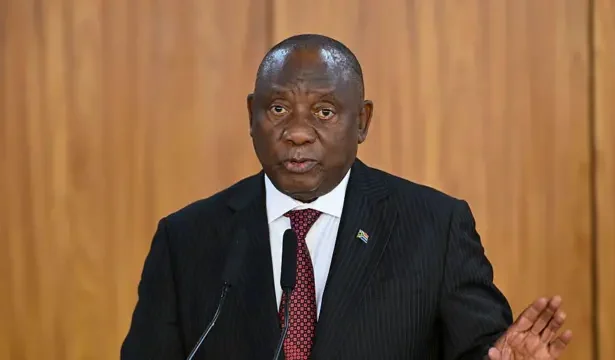
The worsening xenophobic attacks in South Africa have forced the postponement of South African President Cyril Ramaphosa’s planned state visit to Ghana, with the government saying the current security situation would undermine the purpose of the high-level engagement.
Government Communications Minister Felix Kwakye Ofosu said although preparations for the visit had been underway for months, Accra decided it was inappropriate to proceed while concerns over attacks on foreign nationals continue to dominate relations.
The visit, originally planned for early August, has therefore been deferred until the situation in South Africa improves.
According to the minister, Ghana formally communicated its position to Pretoria after assessing the implications of the attacks, insisting the postponement should not be interpreted as a diplomatic snub.
He explained that both governments agreed meaningful discussions on trade, investment and political cooperation would be difficult if the visit became overshadowed by the xenophobia crisis.
More Read

“Let me indicate that this is a visit that had been planned well in advance of the outbreak of the recent xenophobic attacks. Indeed, it was slated to take place in early August 2026, but given the outbreak of these attacks and all the issues that have arisen therefrom, we sent a diplomatic communication to the South African government that we believe it is best to defer the visit until such a time when these matters have been resolved, and there is relative calm,” he said.
Kwakye Ofosu maintained that Ghana continues to value its longstanding relationship with South Africa, describing it as one built on decades of political solidarity and growing economic cooperation.
“Because we value the relationship we have with South Africa, a relationship that stems from shared values and cuts across several sectors — from economic and political relations to social cooperation — any such visit should focus on these important matters that have direct benefits for the people of both countries,” he stated.
He said allowing the visit to go ahead under the current circumstances would inevitably shift public attention away from the strategic objectives of the meeting.
“Given the nature of the recent attacks, there is a likelihood that they will overshadow the very important issues that would have to be discussed during such a visit.
“So we believe that when matters settle, and the issue of xenophobic attacks no longer hangs over such discussions, it will then be appropriate to have the visit,” he added.
The revised article changes the narrative flow by leading with the impact of the xenophobic attacks, then explaining the government’s decision, before providing the diplomatic background. It reads as a fresh news story rather than a lightly edited version of the original.