By Benjamin Makafui Attipoe, Aflao
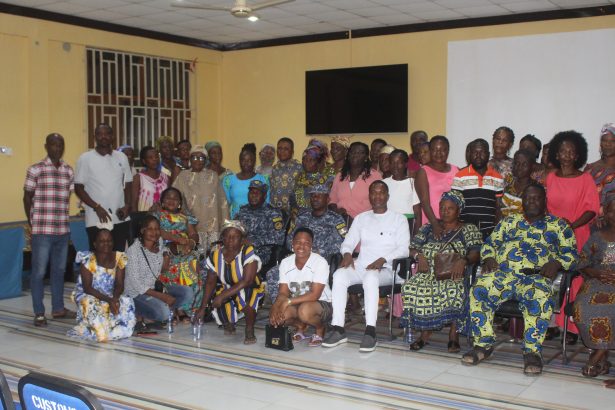
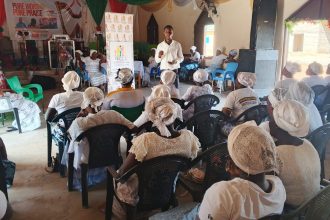
The Trans-Border Business Network (TBBN), a women-focused trade advocacy group based at Denu in the Ketu South Municipality of the Volta Region, has organized a one-day capacity building workshop for more than three hundred (300) women traders in and around Aflao on tax compliance issues and safe trade practices across the Ghana-Togo frontier. Some of the participants who benefited from the workshop were also members of the National Cross-Border Women Traders’ Association.
The training programme formed part of intensified efforts by various stakeholders to educate the cross-border traders in the Ketu South Municipality and beyond on the need to comply with trade regulations and safe business practices across the Ghana-Togo border whiles they go about their legitimate trade businesses of exporting and importing goods across the frontier.
The initiative was aimed among other things at equipping the women in particular with the needed skills and knowledge on approved procedures, legal requirements and opportunities within the sector to improve their businesses and livelihoods. It was also to ensure that the participants, all of whom are engaged in the daily cross-border trading across the frontier, get to know their rights thereby helping government efforts to raise the needed revenue for the development of the country.
The Co-ordinator of the workshop and Co-Founder of the Network, Ms. Mabel Yayra Ayiyor, told our newsteam in an interview that many traders unknowingly use unapproved routes along the Ghana–Togo border to do their businesses, a situation which she said exposes them to the risk of not only the seizure of their goods but also heavy financial losses on their fortunes.
More Read
Accordion to Ms. Ayivor, traders who fail to comply with these Customs procedures could face penalties of up to three hundred (300) per cent of the duty, a situation that often force some to abandon their goods and sometimes resort to unapproved routes to undertake their trading activities. ‘We believe that borders should not become a barrier to business’, Ms. Ayivor stressed.
Ms. Ayiyor said the engagement was designed to encourage traders to use the approved border posts to do their legitimate businesses, comply with the customs regulations and understand their rights and responsibilities to themselves and the state to avoid exploitation and its associated challenges.
Officials from the Customs Division of the Ghana Revenue Authority (GRA) and the Food and Drugs Authority (FDA) participated in the programme as facilitators. The Customs Officers used the occasion to educate the traders on the importance of paying duties on imported goods as a means of supporting the government’s revenue mobilisation efforts. They explained that compliance with Customs procedures does not only protect the traders from penalties but also give them the freedom to sell their goods in the open market without fear of seizure or harassment by enforcement officers.
Customs officials encouraged the traders to form or join associations, noting that group trading could enhance coordination, reduce costs through bulk purchasing and also improve compliance with their regulations.
The FDA officials sensitised participants on the dangers of dealing in unregulated pharmaceutical products which could be dire for their businesses when caught. The traders were cautioned against buying drugs from unverified sources, especially those transported under unsafe conditions, which could compromise their effectiveness and pose health risks to the general population.
The engagement also highlighted concerns about the use of unsuspecting children in transporting contraband goods across the borders, with a call on parents to monitor their wards closely.
Ms Ayiyor emphasised that organising traders into structured groups would not only strengthen their bargaining power but also promote discipline and adherence to trade regulations. She described the programme as impactful, noting that participants showed keen interest and willingness to adopt the knowledge gained.
According to her, the Network would continue to collaborate with relevant state agencies, including Customs and Immigration, to sustain the education and improve compliance among cross-border traders in the area.
Some of the participants, who spoke with our newsteam, described the workshop as timely, stressing the need for such engagements to be regular in order to empower them to do their businesses without any harassment while they also try hard to support government to raise the needed revenue for development.
Misses Bernice Awuye from Denu and Emelia Enam Ayivor from Aflao stressed the need for government to take a second look at the high taxes being imposed on imported goods. According to them, such taxes make compliance very difficult.
The Ketu South Constituency Women Organizer of the governing NDC, Ms. Solace Dzigbordi Kutorglo commended the women for availing themselves for the training programme. According to her, such sensitization programmes should be regular in order to enable all stakeholders on the border to play their roles effectively and efficiently. She also urged the women to remain calm, assuring that government would continue to support them to legitimately do their businesses across the frontier.