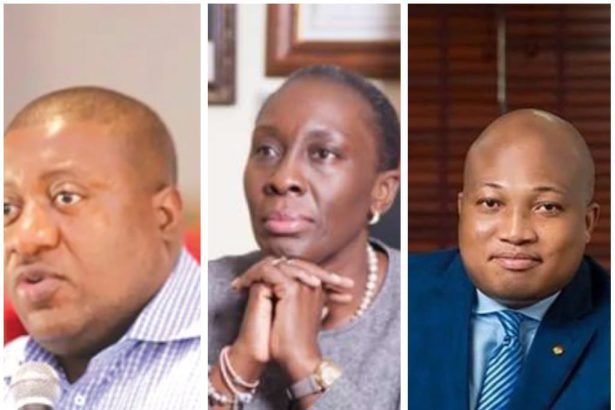
A legal battle over Ghana’s constitutional requirements for international agreements is set to return to the Supreme Court as one of the plaintiffs in the landmark Gitmo 2 case seeks enforcement of Article 75 of the 1992 Constitution.
In 2016, Henry Nana Boakye and Madam Margaret Banful, represented by lawyer Nana Adjei Baffour Awuah, successfully challenged the legality of an agreement by the Mahama administration to receive two former Guantanamo Bay detainees into Ghana without parliamentary approval. The Supreme Court, in Writ No. J1/7/2016 (Margaret Banful and Henry Nana Boakye vrs The Attorney General), declared the actions unconstitutional and illegal.
Mr. Boakye has now announced plans to return to the Supreme Court, citing ongoing violations of the Constitution by the Executive. He has instructed his lawyers, Nana Adjei Baffour Awuah and Lenin Anane Agyei, to commence legal proceedings to enforce Article 75, which governs the ratification of international agreements by Parliament.
The call comes in the wake of comments by the Minister of Foreign Affairs, Samuel Okudzeto Ablakwa, during an interview on Citi TV’s Point of View with Bernard Avle. Ablakwa sought to justify President Mahama’s current agreement to receive deportees from other West African countries, arguing that a Memorandum of Understanding (MOU) did not require parliamentary ratification.
“What I would like to do is unequivocally condemn what is happening in this enclave, because it is very clear that this land is state land and should not be taken over by private individuals, especially when we are not sure who is giving the permission,” Dr. Zanetor Agyeman-Rawlings said in a related context (Note: this can be omitted if irrelevant).
More Read
During the interview, Bernard Avle read the Supreme Court’s 22 June 2017 ruling, which stated that the form of an agreement—be it MOU, treaty, or convention—is irrelevant if it creates binding legal obligations on Ghana. The Court emphasized:
“The language of Article 75 is perfectly clear… where, by various forms of documentation, the Government of Ghana binds the Republic of Ghana to certain obligations in relation to another country or group of countries, an international agreement comes into existence… despite the form in which it has been drafted… it is intended to create an obligation on the part of Ghana to the USA whereby, inter alia, Ghana binds herself to ‘receive’ and ‘resettle’ the said two persons….”
The Supreme Court concluded that, “…upon a true and proper interpretation of Article 75 of the 1992 Constitution of Ghana, the President of the Republic of Ghana… required the ratification by an Act of Parliament… and by virtue of the failure to obtain such ratification the agreement is unconstitutional.”
Mr. Boakye warns that President Mahama, Hon. Ablakwa, the Attorney General, and Cabinet officials cannot rely on the technical form of the agreement to bypass parliamentary approval, noting that the MOU has already been operationalized by receiving some deportees.
He expressed concern over the Minister of Foreign Affairs elevating the opinions of the Attorney General and Cabinet above the binding precedent set by seven Supreme Court Justices, led by then-Chief Justice Sophia Akuffo.
“By disregarding the Supreme Court’s decision in the Gitmo 2 case… the President, Ablakwa, the Attorney General, and the entire Cabinet have demonstrated reckless disregard for the 1992 Constitution of Ghana, the Parliament of Ghana, and the Supreme Court,” Mr. Boakye said.
The case highlights ongoing tensions between Ghana’s Executive and constitutional oversight mechanisms, and observers say the impending Supreme Court proceedings could set significant precedent for future international agreements.