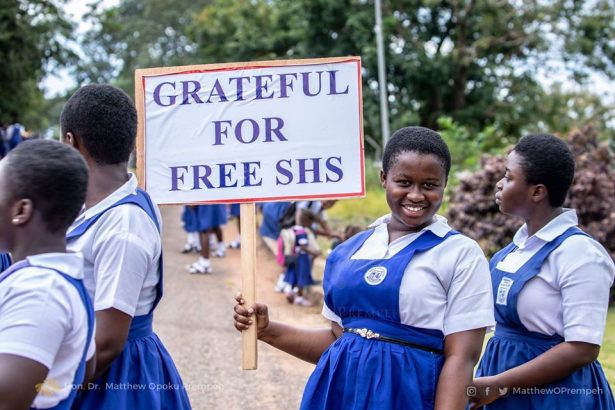
The Government of Ghana has approved the inclusion of sixty (60) private senior high schools in the Free SHS policy for the 2025/2026 academic year, marking a significant milestone in the evolution of Ghana’s education system.
The move, sanctioned by the Ministry of Education and communicated through the Ghana Education Service (GES), seeks to expand access to quality secondary education, reduce pressure on public SHSs, and promote broader inclusion under one of the country’s most impactful social interventions.
In a memo signed by Prince C. Agyemang-Duah, Director of the Schools and Instructions Division at GES, Regional Directors have been instructed to disseminate the approved list of schools to Heads of Basic Schools, BECE candidates, and parents across the country ahead of the West African Examinations Council’s (WAEC) school selection process.
Following the announcement, the Ghana National Council of Private Schools (GNACOPS) issued a statement praising the government—particularly the Ministry of Education and the Ghana Education Service—for what it described as a “historic and progressive” decision.
“This progressive move marks a significant milestone in Ghana’s educational transformation journey,” the Council said. “It underscores the Government’s commitment to inclusive, collaborative education delivery and reaffirms the important role of private schools in advancing national development goals.”
GNACOPS extended heartfelt appreciation to President John Dramani Mahama, the Honourable Minister for Education, and other key stakeholders for their leadership and dedication in expanding the Free SHS policy to include the private sector.
The Council also acknowledged the efforts behind the scenes and assured private schools yet to be included that more collaboration is underway to extend the policy further in future cohorts.
According to GNACOPS, the inclusion of private SHSs is not just about expanding numbers but also about strengthening quality and equity across Ghana’s educational landscape. The selected schools, which are spread across all regions, will provide diverse academic programmes and are expected to maintain high standards of transparency and accountability under the Free SHS initiative.
GNACOPS called on the approved schools to serve as ambassadors of excellence, proving that the private education sector is not only capable but also critical in delivering free, equitable, and high-quality education to all Ghanaian children.
“We urge the approved schools to serve as ambassadors of excellence, demonstrating through conduct, teaching, and management that the private sector is a trustworthy and capable partner.”
At the same time, the Council reassured schools not yet included to remain compliant with regulatory standards and prepare for future eligibility, as government and GNACOPS continue to engage on expanding the collaboration.
The 2025/2026 academic year promises to be a pivotal moment in the Free SHS policy’s history, as the private sector formally joins public institutions in delivering the programme.
For thousands of students and families, particularly in underserved areas, the decision offers renewed hope and access to opportunities that were once out of reach.
As preparations begin for placement and school selection, GNACOPS reaffirmed its commitment to shaping policy, fostering dialogue, and ensuring private education continues to play a meaningful role in Ghana’s national development.